
CIS Conference: International human rights lawyer speaks about intersectionality of human rights, environmental justice
CIS Conference: International human rights lawyer speaks about intersectionality of human rights, environmental justice
CIS Conference: International human rights lawyer speaks about intersectionality of human rights, environmental justice
5/1/2023
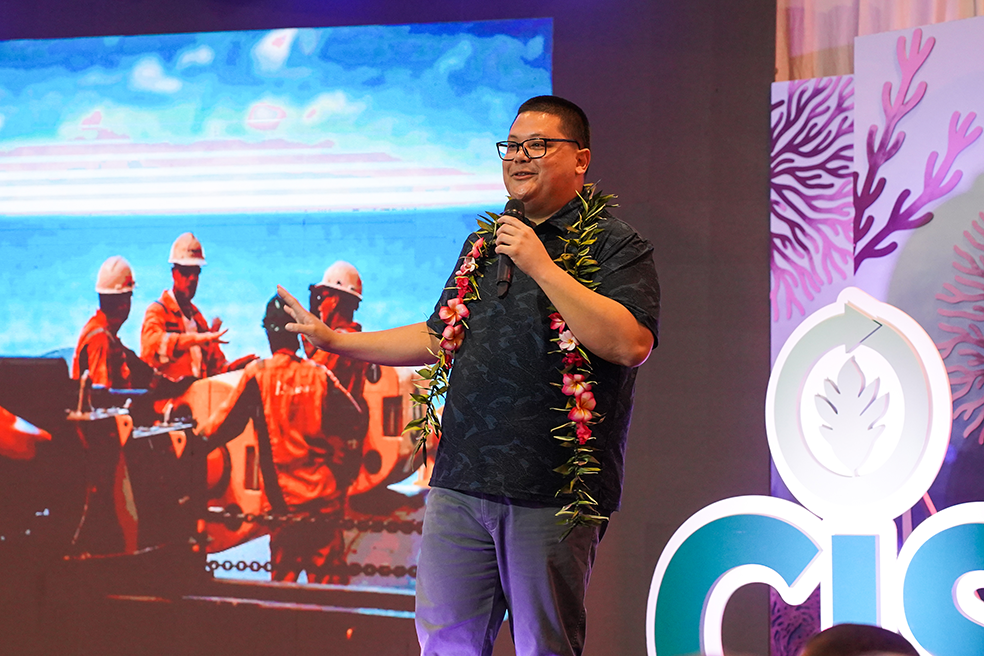
International human rights lawyer Julian Aguon spoke about his experience working at the intersection of indigenous rights and environmental justice on the fifth day of the University of Guam Conference on Island Sustainability.
Aguon, the founder of environmental advocacy firm Blue Ocean Law, shared details of their recent work representing the Republic of Vanuatu in a campaign for an advisory opinion on climate change and human rights from the International Court of Justice (ICJ).
Aguon said that this would place the nexus between climate change and human rights on firm international law footing.
Vanuatu is a small island nation that is among the most vulnerable to the impacts of climate change. In 2019, they announced their intention to pursue the advisory opinion, recognizing the inadequacy of multilateral processes in addressing the issue.
Aguon noted that the climate crisis is not just theoretical but is already impacting frontline communities such as Vanuatu. He highlighted the recent cyclones that have severely impacted the island nation, wiping out 68 percent of the country's GDP in a day.
The campaign was a diplomatic feat. According to Aguon, Vanuatu was able to convince 193 members of the United Nations to not oppose the request. As a result, the UN General Assembly requested the opinion from the ICJ based on consensus.
Aguon emphasized the importance of changing perspective on international climate change law.
“It is time to finally stop working in silos --- international climate change law people on the one side and human rights law people on the other side. It is time to listen to the growing global youth demand,” he said.
He also praised the role of civil society organizations, including a group of students at the Vanuatu campus of the University of the South Pacific who organized themselves and rallied the support of 1,500 international civil society organizations.
“That is the kind of momentum that this indigenous Pacific Islander student-led initiative created," he said.
Aguon's work highlights the importance of recognizing the intersectionality of environmental justice and human rights. As the impacts of climate change continue to worsen, Aguon emphasized the need to include the voice of communities at the frontline of the issue.