
G3 Conservation Corps kicks off invasive species awareness week with biosecurity orientation, tour
G3 Conservation Corps kicks off invasive species awareness week with biosecurity orientation, tour
G3 Conservation Corps kicks off invasive species awareness week with biosecurity orientation, tour
5/25/2022
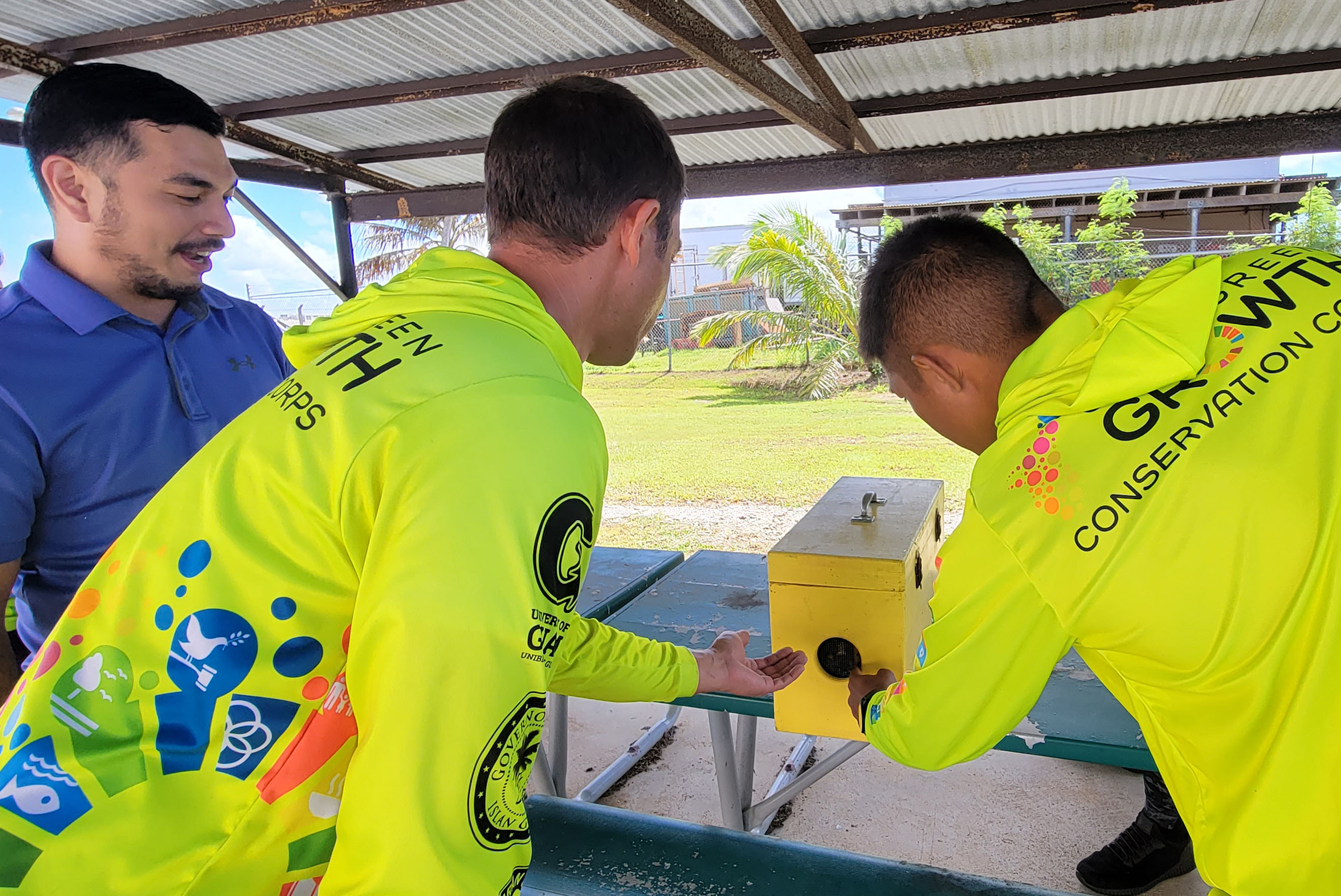
The Guam Green Growth Conservation Corps kicked off Guam Invasive Species Awareness and Biosecurity Week on Monday, May 23, with an orientation with the Customs and Quarantine Agency’s Agriculture Canine Unit (ACU) and a tour of the USDA plant inspection facility in Tiyan.
As part of the weeklong commemoration from May 23 to 29, G3 Conservation Corps members will be participating in several activities that promote biosecurity and invasive species awareness, control, and management.
Before the orientation and tour on Monday, G3 Conservation Corps member Dulce Amor Imbo read the Governor’s proclamation as a reminder that invasive species are everyone’s responsibility. After the reading of the proclamation, Customs and Quarantine officers gave an overview of the ACU K9 program to prevent the smuggling of illegal items, including certain plant and animal products, into the island’s ports of entry. Claude, one of the trained canine staff, demonstrated his skills in detecting these illegal items.
Invasive plant and animal species are non-native to the island and their introduction to the local ecosystem could potentially lead to economic losses and cause negative impacts to the environment and health of the community.
For example, the introduction of the brown tree snake to Guam has led to the loss of native forest birds and the coconut rhinoceros beetle continues to decimate the island’s coconut tree population. The chain-of-love vine chokes swathes of forests and prevents the growth of native plant species.
Dr. Glenn Dulla, invasive species coordinator for the Guam Department of Agriculture-Biosecurity Division, described the activities lined up for the G3 Conservation Corps, “Throughout the week we are going to expose them to our different invasive management projects which include our coconut rhinoceros beetle and little fire ants’ management programs.”
He added: “In our work facility we have so many different partners and agencies working with us to achieve the same goal which is to manage invasive species or to prevent invasive species from coming into Guam. With the G3 Conservation Corps coming in they can spread that message to the community, especially since it is a new day and age where peers communicate electronically through social media.”
After the first day, Imbo said being introduced to the different areas of biosecurity has been an informative process. She added that while the community may have heard about the different invasive species that are out there, they may have not heard about the current initiatives that are being implemented by multi-sectoral partners to protect Guam’s ports of entry, or to control and manage existing populations of invasive plants and animals that are already on island.
“So, it was great to hear about all the programs that target invasive species and address Guam's biosecurity here at DoAg like the agricultural K9 unit that check for prohibitive items at the ports of entry and how they are trained to inspect these things. It was also interesting to learn about the work being done with metarhizium, this fungus, which can help eradicate coconut rhinoceros beetles that's destroying a lot of our coconut trees. It has been a wonderful experience learning from the staff at DoAg Biosecurity Division,” Imbo said.
The University of Guam is part of the Guam Invasive Species Council, a body that was created by the government to prioritize invasive species outreach and education to increase awareness about the unique threats invasive species pose to Guam and the region. The Guam DoAg, Customs and Quarantine and other agencies are also part of the council.