
- Home
-
Admissions
-
Academics
-
Students
-
Research
-
Research Centers
- Cancer Research Center
- Center for Excellence in Development Disabilities Education, Research & Service (CEDDERS)
- Center for Island Sustainability (CIS)
- Marine Laboratory
- Micronesian Area Research Center (MARC)
- UOG Land Grant | agInnovation Research Center
- Water and Environmental Research Institute (WERI)
-
Programs and Departments
- Guam EPSCOR
- Guma' Tinemtom - Micronesia Data Laboratory
- Pacific Islands Climate Adaptation Science Center (PI-CASC)
- Pacific Islands Cohort on Cardiometabolic Health (PICCAH)
- Research Corporation of UOG
- RFK Memorial Library
- UOG Press
- UOG Sea Grant
- University Libraries Digital Team
- NASA Guam Space Grant
- NASA Guam EPSCoR
-
Research Centers
-
Outreach
- Giving
- Advancement
-
About
Plant Biology class takes action against a fast-spreading weed
Plant Biology class takes action against a fast-spreading weed
Plant Biology class takes action against a fast-spreading weed
12/4/2025


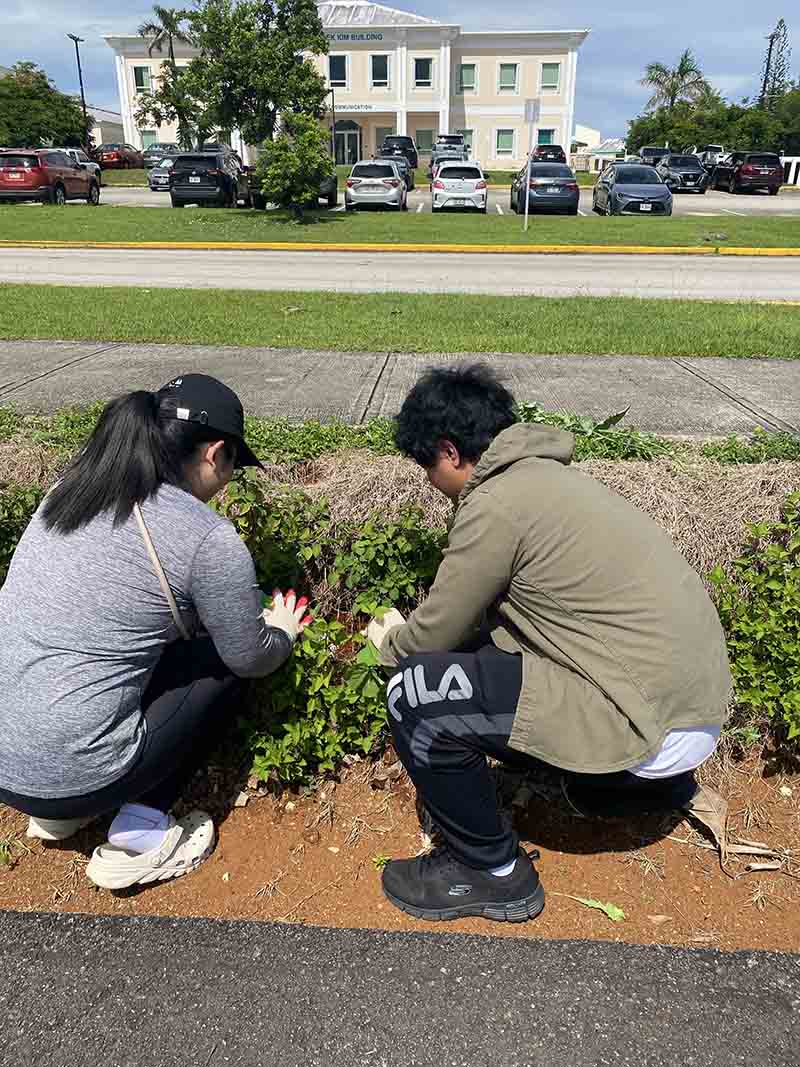
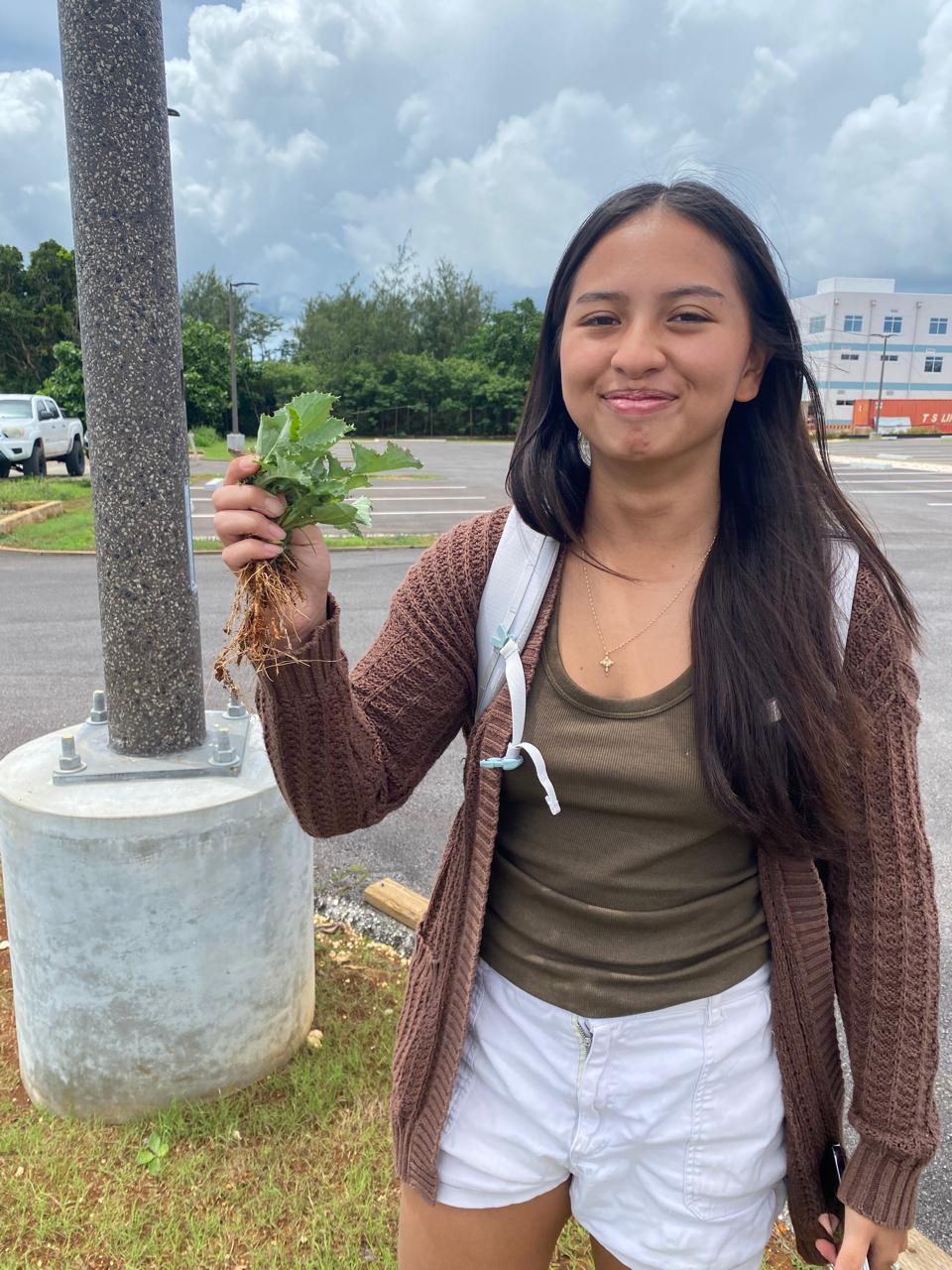
Students in this semester’s Plant Biology (BI-302) class gained first-hand experience in environmental stewardship after helping document and remove an invasive weed recently found to be spreading on campus.
Wei Xiao, plant biologist and curator of the UOG Herbarium, identified the plant as common sowthistle (Sonchus oleraceus L.) after spotting it on campus in early September. Concerned about its rapid spread, she invited her students to participate in a field project to manually remove the plants and monitor the site. Together, the class removed 109 plants initially, then another 32 over two follow-up site visits. Xiao and her students will continue to monitor the campus for the weed in upcoming semesters.
Native to Europe and the Mediterranean, common sowthistle has become invasive in many parts of the world, where it competes aggressively with crops and native species. Mature plants can reach two feet in height and produce up to 8,000 wind-dispersed seeds, allowing the species to establish quickly in disturbed soils such as roadsides, gardens, and fields.
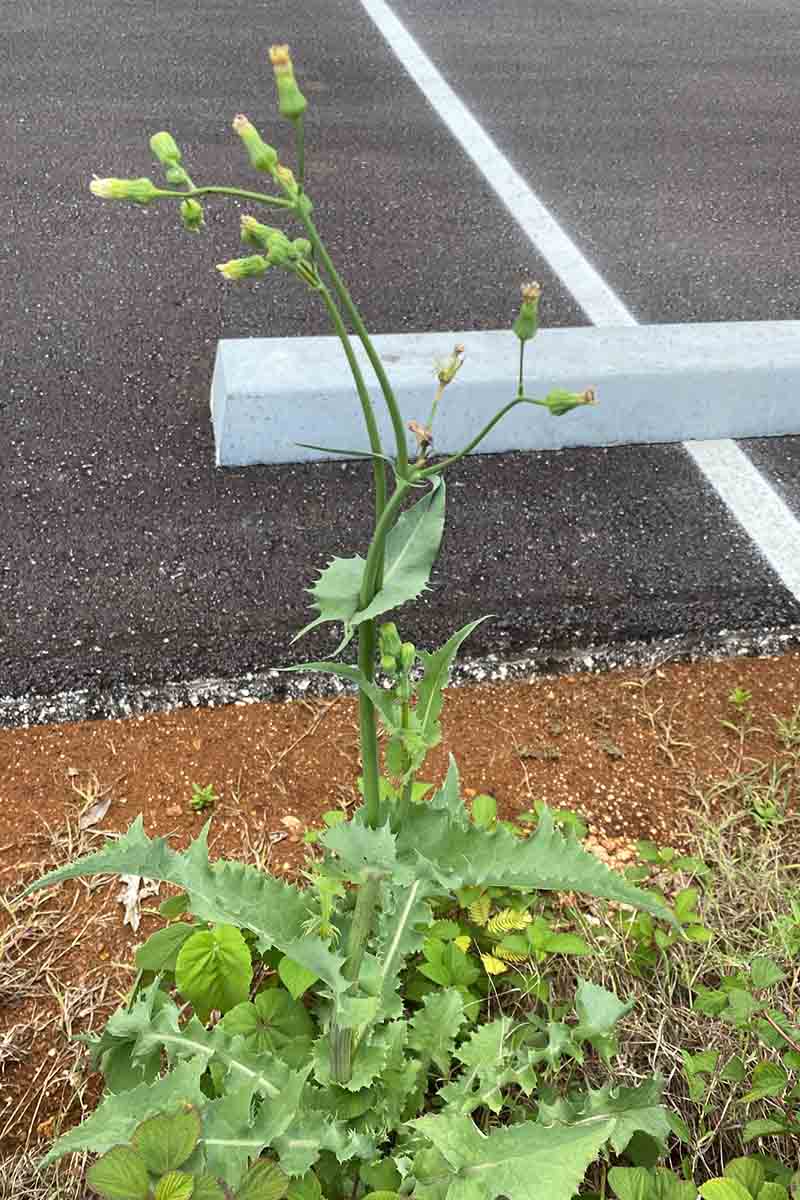
Xiao said the first documentation of the common sowthistle on island was in the 1970s, but with the steady increase of annual precipitation, Guam’s climate is becoming increasingly “friendly” to this weed, making it more of a threat.
“Because the campus hosts thousands of people each day, a weed like this could easily spread unnoticed across the island,” Xiao said. “This poses a real threat to agriculture, urban landscapes, and Guam’s native ecosystems.”
By documenting and removing the sowthistle, the Plant Biology class not only helped prevent the further spread of the weed on island, but they also learned the importance of each person’s responsibility in safeguarding Guam’s natural environment for future generations, Xiao said.
The project gave students valuable experience in plant identification, ecological monitoring, and conservation practices. The class is hopeful their work will encourage more community members to report unfamiliar or newly introduced plants and animals to prevent invasive species from taking hold on island.
HOW TO REPORT INVASIVE PLANTS
If you find a weed or plant on island that seems to be new or spreading, you can report
it to the Guam Department of Agriculture's Invasive Species Hotline at 475-PEST (475-7378) or to the UOG Land Grant Agriculture & Natural Resources office
at (671) 735-2080.