Tåotao Tritons | Digging Deep: Dr. Michael Carson and the Enduring Work of Archaeology
Tåotao Tritons | Digging Deep: Dr. Michael Carson and the Enduring Work of Archaeology
Tåotao Tritons | Digging Deep: Dr. Michael Carson and the Enduring Work of Archaeology
2/19/2026
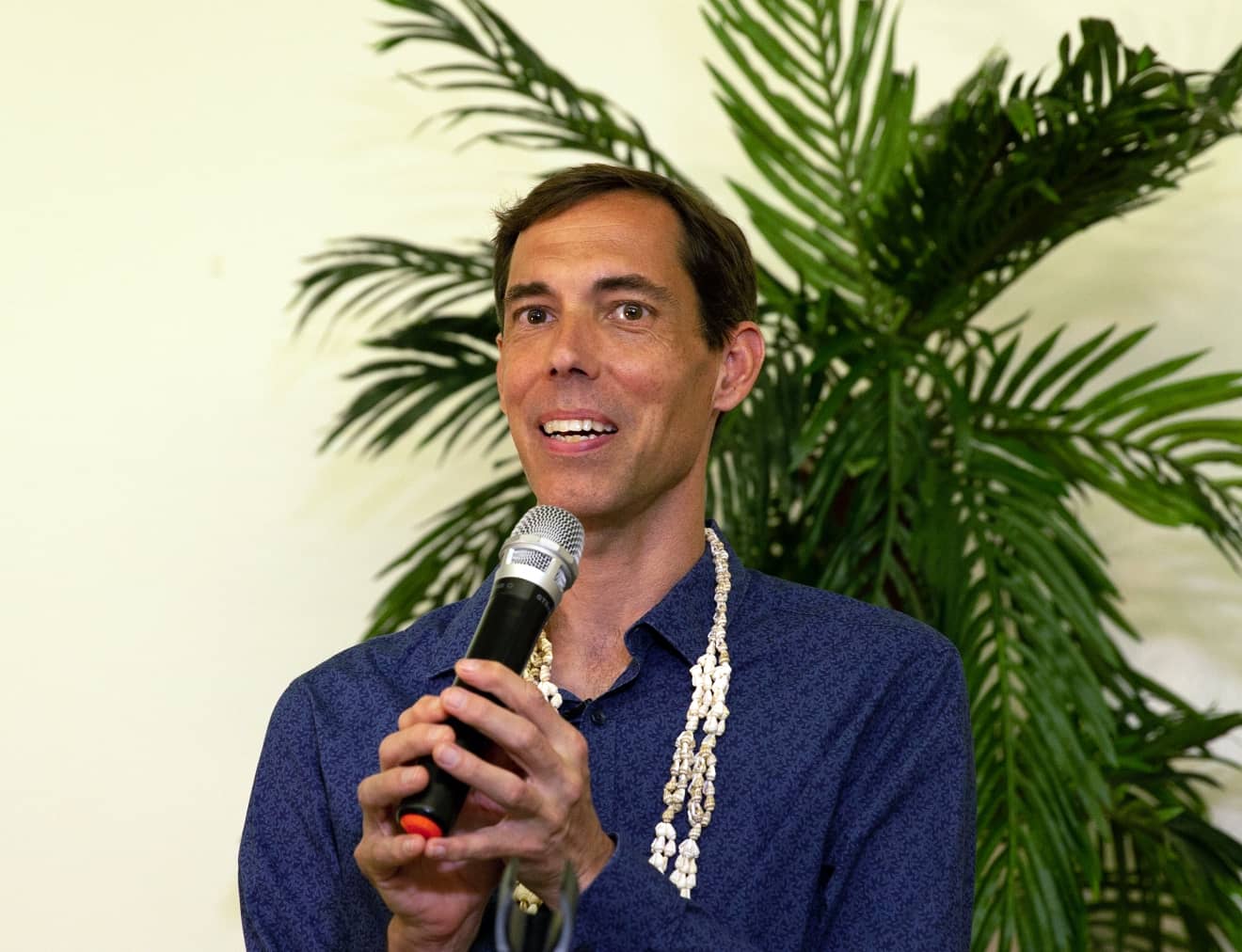
For many in the general public, archaeology brings to mind unearthed artifacts from deep in the ground that are then put on display in museums. But Dr. Michael Carson understands archaeology is not a single moment of discovery that ends behind isolated glass cases; rather, it is a long-term relationship that develops over decades, across disciplines, and in respectful dialogue with the land and the people and communities that are tied to it.
From Behind the Lens and Into the Field
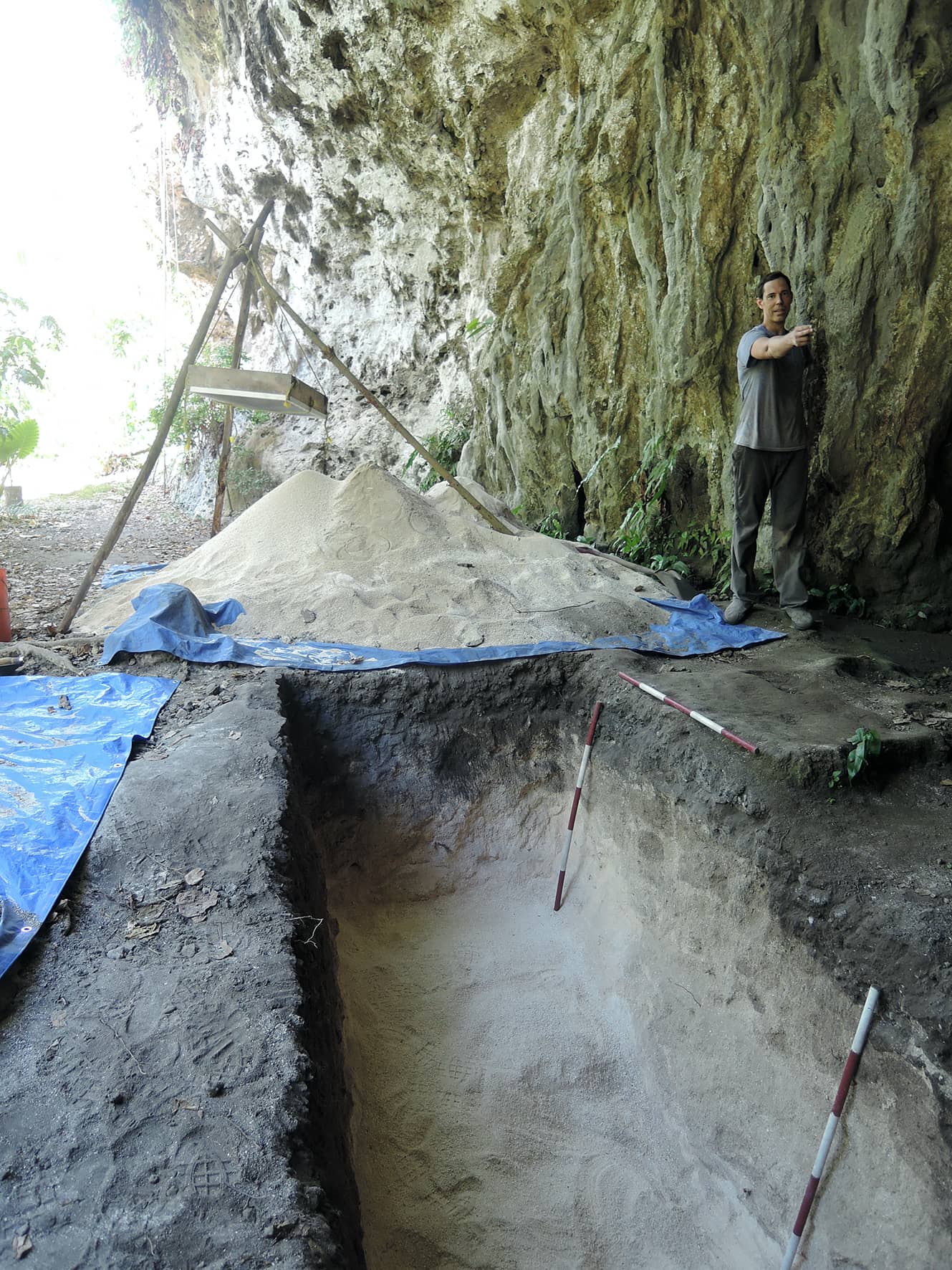
Carson, a professor of archaeology and current faculty chairperson of the University of Guam’s Micronesian Area Research Center, has spent nearly 30 years building a career dedicated to investigating the ancient landscape histories in Guam and the Marianas, but his story can be traced back to a slightly unexpected beginning.
“I never knew that I could be an archaeologist until I was in college,” he admits. “Before that, I wanted to be a filmmaker for making documentaries about archaeology.”
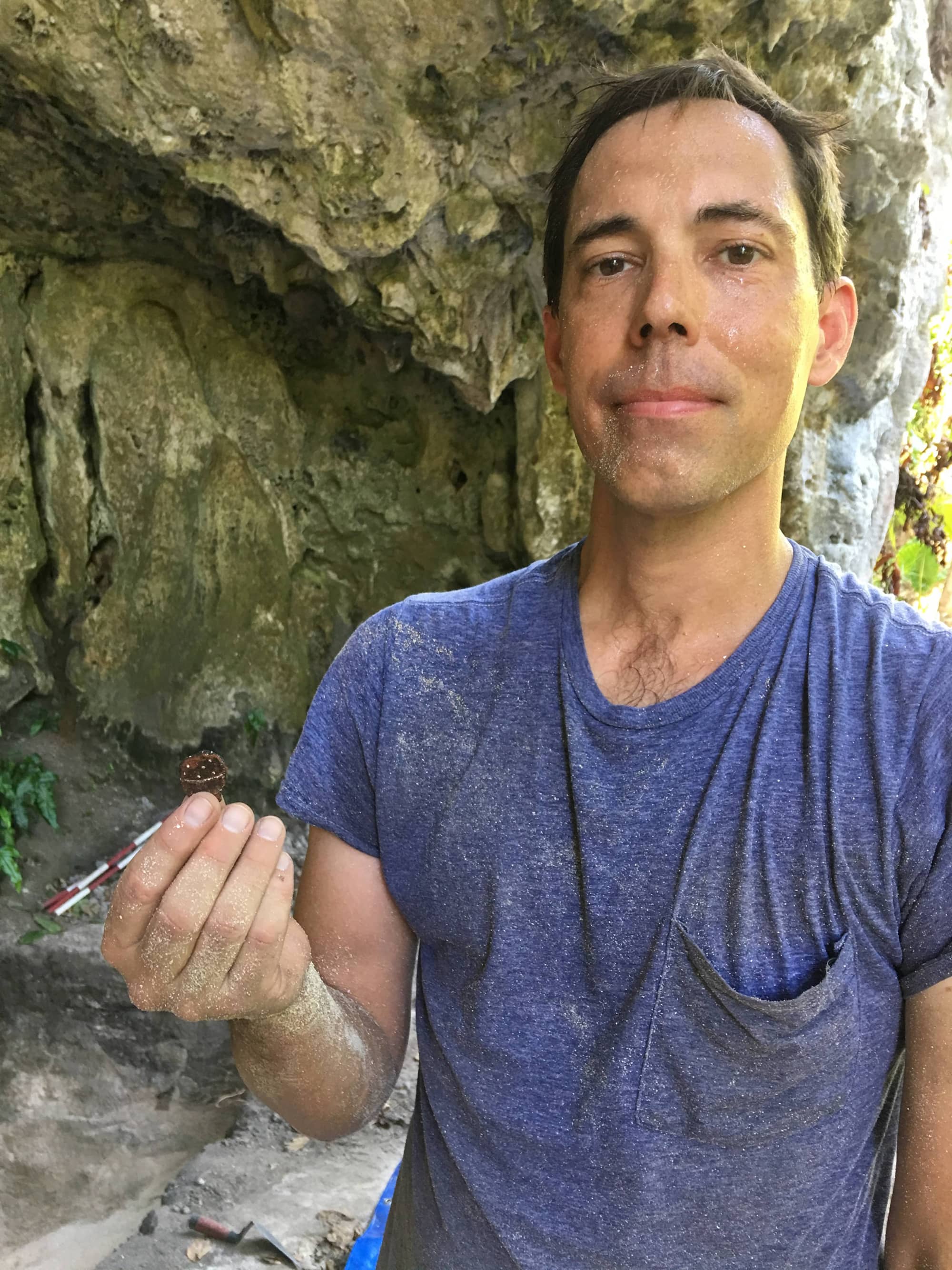
The call to be directly in the field instead of behind the camera lens launched Carson on his career trajectory. With a background in anthropology, he earned his bachelor’s from the University of California, Los Angeles and his master’s and PhD from the University of Hawai’i at Mānoa. His time in Hawai’i led to more fieldwork and research opportunities in the Pacific, taking him to French Polynesia, New Caledonia, American Samoa, and Fiji.
What drew Carson to the Marianas and eventually staying in Guam was the rich landscape
of the islands, as well as the vast potential of archaeological work that had yet
to be done.
The Basis of Knowledge
With a resume that includes classroom teaching, community training, and military and private-sector projects, Carson stays true to what he believes is the heart of archaeology: establishing reliable timelines and documenting ancient landscapes that help set up the groundwork for future research. This foundation-building is also why, instead of specializing, he takes a generalist approach that blends natural history and cultural history.
“I consider it the basis of the knowledge that we have. The highly specialized work really cannot be done until we have that basis, and the Pacific Islands is one place where that baseline knowledge still needs to grow,” Carson shares.
Carson’s work has confirmed that some of the region’s archaeological sites are among
the oldest in the Pacific, leading to the identification of the earliest decorated
pottery, shell ornaments, octopus lures, and rice cultivation. His research highlights
the importance of patience and careful documentation to verify the accuracy and impact
of such findings.
A Starting Point for Inquiry, an Intersection of Disciplines
Driven by his interest in the questions that are most important to others, Carson views archaeology as both a starting point and an intersection.
“I can provide the evidence and point out the gap in knowledge because the physical evidence doesn't tell us what people were thinking or feeling. But of course, the people who made and used these artifacts had all these thoughts and beliefs,” Carson explains.
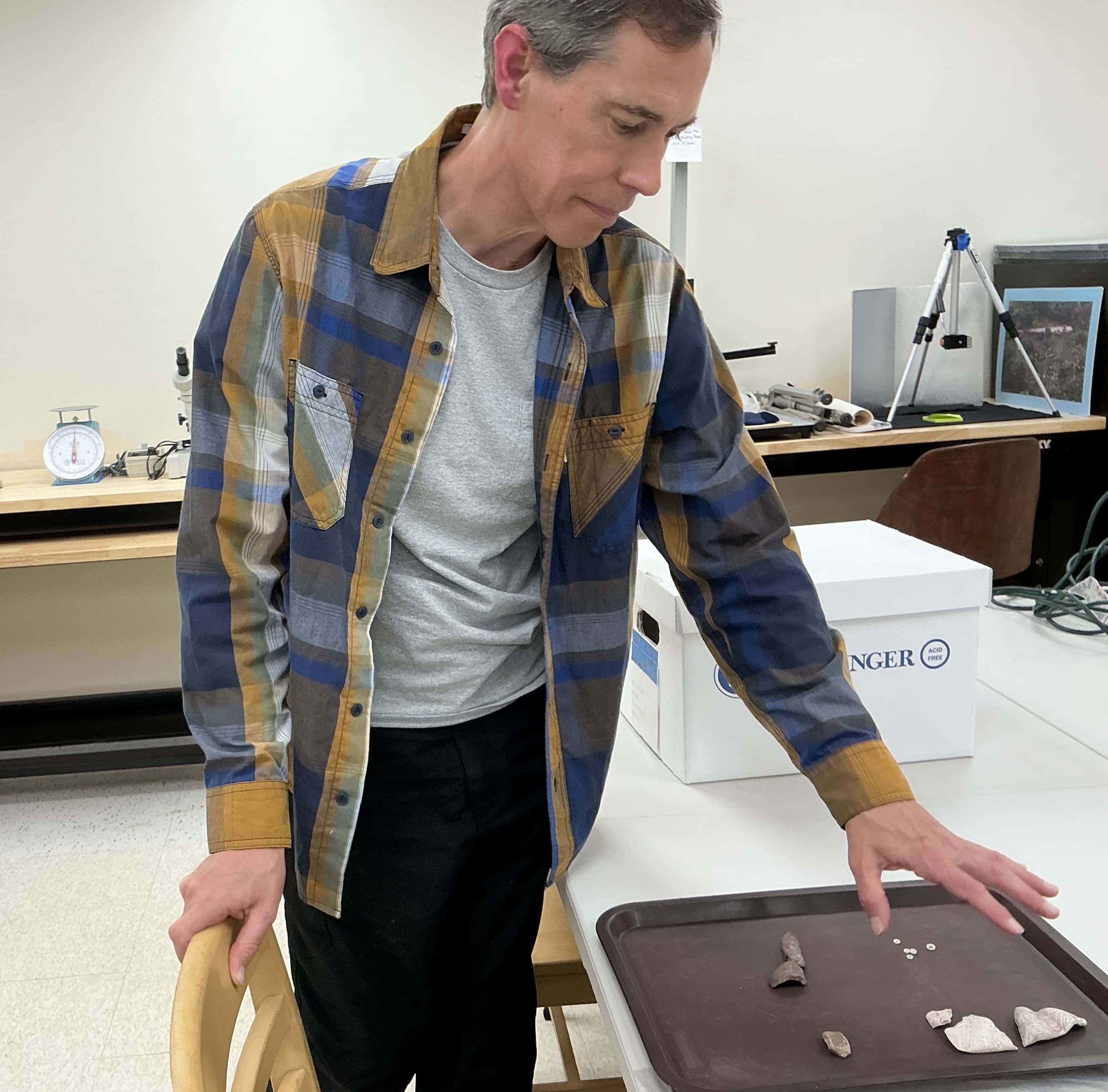
After establishing the material evidence, Carson then engages with a range of experts,
from environmentalists and historians to linguists and cultural practitioners, to
try to understand physical artifacts in a broader context. The collaborations don’t
necessarily lead to definitive answers, but instead, allow archaeology to help open
the door for other fields to make interpretations and meaning.
Community at the Core of Impact
A major aspect of Carson’s work ethos is transparency. He ensures there is public notice and outreach for all of his projects, and whenever possible, he makes his excavation reports, maps, and datasets available online for free.
“So much work goes into excavating these sites, and we don't want to just lock it away in a storage box,” Carson says. “We want to gain the maximum information and share it with the people who want to know about it.”
Carson is equally attentive to showing respect to the people and places in which he works. Any time human remains are found at a site, he stops excavations until the proper authorities are called in to handle them with care. He is also mindful of the living communities connected to these spaces.
One of his latest projects involves a survey of Asan Beach Park, which hosted Vietnam refugees during Operation New Life in 1975. Along with University of Wisconsin–Madison’s Dr. Nam Kim, a fellow archaeologist who was a refugee at the Asan site, Carson hopes to identify the layers of history within the landscape. Just as vital to the project is public input.
“Many people living in Guam with memories of working there may want to contribute to make sure we understand their perspective and what they know about the area’s history,” Carson says. “It’s important to have enough public outreach for people to contribute the stories they are willing to share, as well as to respect the wishes of people who don't want to share things.”
The Work Continues
With multiple projects planned into the near future, Carson continues to treat archaeology as an opportunity to bridge the past with the present, to bring time into living memory. His commitment to doing the work that has yet to be done is just one of the many crucial ways for the stories in Guam’s history to be responsibly examined and preserved for generations to come.