
Healthy soils in Guam demonstrate natural suppression of banana-damaging parasites in UOG study
Healthy soils in Guam demonstrate natural suppression of banana-damaging parasites in UOG study
Healthy soils in Guam demonstrate natural suppression of banana-damaging parasites in UOG study
3/6/2026
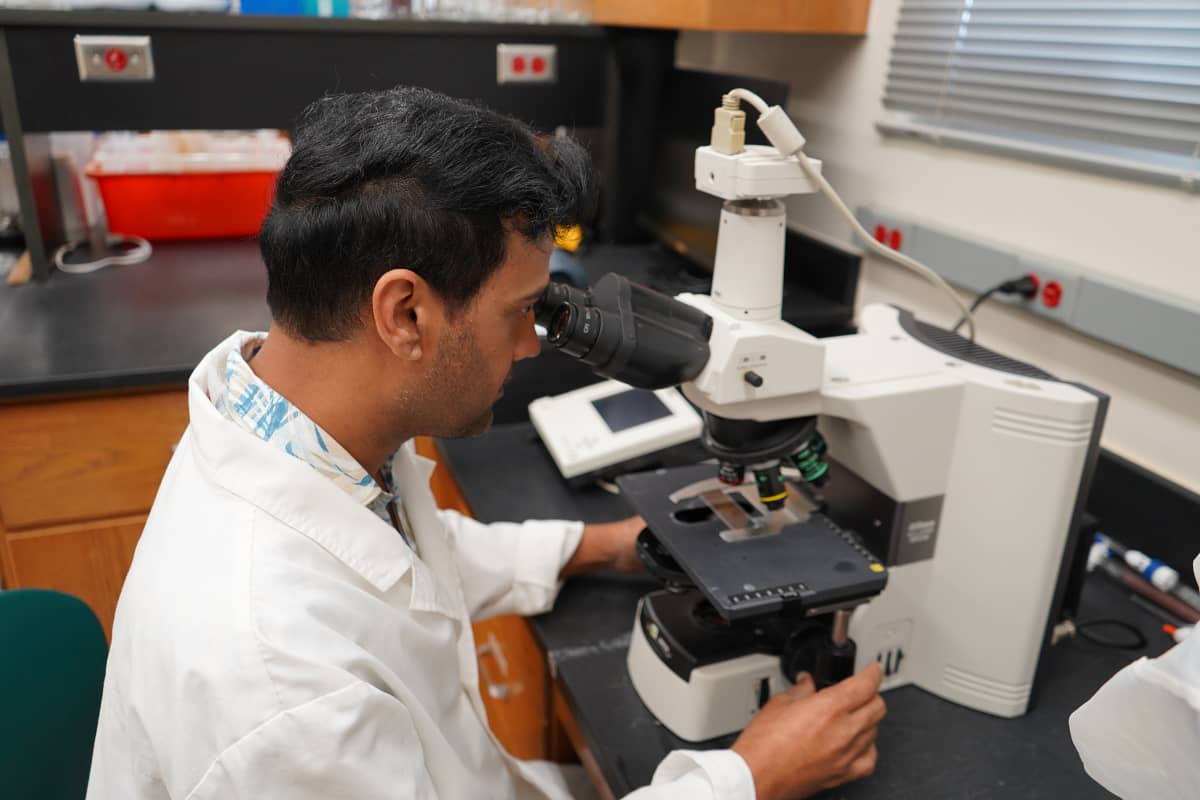
A newly published study from the University of Guam sheds light on a tiny but powerful ally in the soil and how it could help Guam farmers and growers protect their crops naturally.
Published on Dec. 11, 2025, in the journal Frontiers in Plant Science, the study was conducted by Dr. Richard R. Singh, an assistant professor of sustainable plant production, and soil chemist Clancy Iyekar of the agInnovation Research Center under UOG Land Grant. The study focuses on nematodes — microscopic roundworms in soil that are poorly documented in Guam — specifically exploring how certain “good” nematodes may help control the harmful ones that damage crops.
Tiny worms, big impact
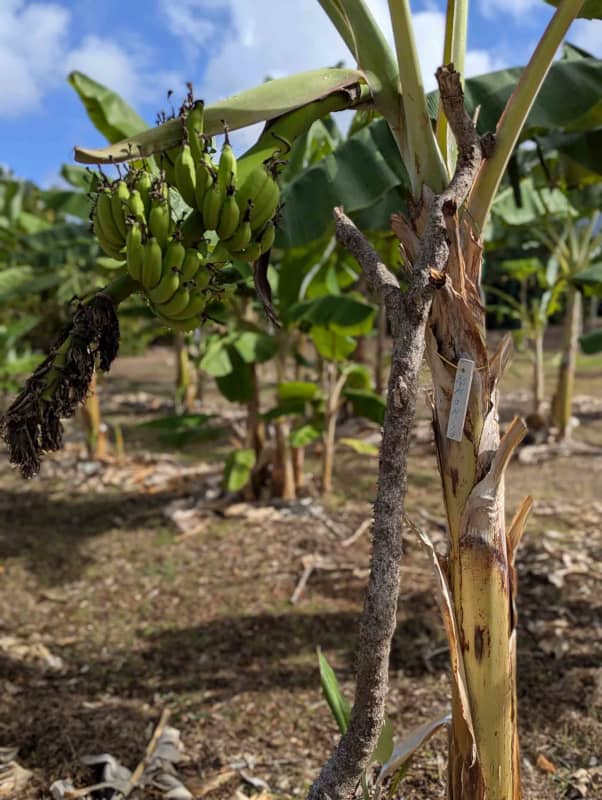 Bananas are one of the most important local crops in Guam, contributing significantly
to food security, cultural traditions, and small-scale farm income across the island.
But they are vulnerable to plant-parasitic nematodes, especially root-knot nematodes.
Bananas are one of the most important local crops in Guam, contributing significantly
to food security, cultural traditions, and small-scale farm income across the island.
But they are vulnerable to plant-parasitic nematodes, especially root-knot nematodes.
Plant-parasitic nematodes in banana plants cause root galls that reduce the plant’s ability to absorb water and nutrients. This leads to poor plant growth, yellowing, plant toppling, and reduced yields. They also cause indirect losses by predisposing plants to secondary infections and transmitting pathogens.
Plant-parasitic nematodes are estimated to cause hundreds of billions of dollars in crop losses globally each year. Without timely research and attention, their impact could escalate into a much larger agricultural threat in the future, Singh said.
Nematodes found in Guam
The research team studied five banana cultivars grown at UOG’s Inalåhan Research & Education Center in southern Guam. They found that all cultivars had similar levels of plant-parasitic nematodes in their roots. The most dominant harmful species was root-knot nematode (Meloidogyne species) — about four to five times more abundant than other damaging types.
However, the researchers also discovered something encouraging: The soils contained high numbers of beneficial nematodes, including predatory nematodes (Mononchus species) that feed on plant-parasitic nematodes.
“Not all nematodes are harmful,” Singh said. “Our soils in Guam are full of beneficial nematodes that actually help regulate pest populations. It’s a natural system of checks and balances happening underground.”
The study showed that plant-parasitic nematodes made up only about 13% of the total nematode community in the banana root zone. In contrast, bacterivores (which help recycle nutrients) made up about 40%, and predatory nematodes accounted for up to 30%. Importantly, the number of harmful nematodes detected in banana roots — an average of 34 per 100 grams — is well below commonly cited damage thresholds, which are often around 100 per 100 grams of root tissue.
“This indicates that in our study site, natural suppression may already be occurring,” Singh said. “That’s good news for local growers.”
Soil tests at the study site also revealed high levels of organic matter, carbon, and nitrogen — conditions that support beneficial soil life.
Predator-prey dynamics: ‘Effective when given time to work’
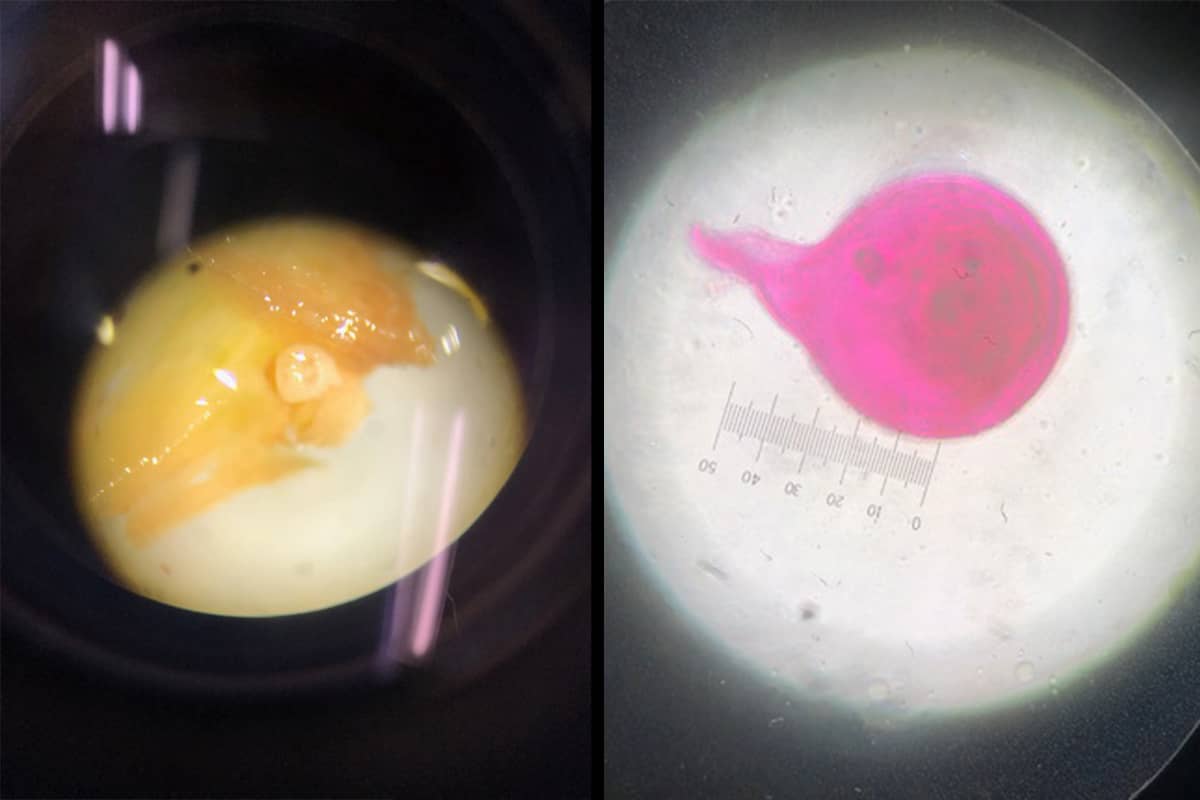 To better understand how predatory nematodes control harmful ones, the team conducted
controlled greenhouse experiments using tomatoes as a model crop.
To better understand how predatory nematodes control harmful ones, the team conducted
controlled greenhouse experiments using tomatoes as a model crop.
When root-knot nematodes were introduced alone, plants developed heavy galling. But when predatory nematodes were added, significant reductions were observed over time, including:
- 3- to 5-fold reductions in gall formation
- 5- to 7.5-fold reductions in egg-laying females
- major declines in juvenile nematode populations.
The effects became stronger six and eight weeks after inoculation, demonstrating that biological control improves over time.
“This is one of the first studies in nematology to explore temporal dynamics — how predator-prey populations change over time,” Singh said. “It shows that biological control isn’t instant, but it can be very effective when given time to work.”
What this means for Guam farmers and residents
For Guam’s agricultural community, the study reinforces the importance of maintaining healthy soil. Soils rich in organic matter — such as compost, wood chips, grass clippings, and animal manure — support beneficial nematodes that suppress harmful species.
This research also provides a scientific foundation for the potential use of predatory nematodes as a biopesticide in the future — a process that would require regulatory clearances and ensuring ecological safeguards through contained field trials and environmental safety testing.
“By working with nature instead of against it, we can protect our crops, improve soil health, and strengthen food security for the island,” he said.
The study was funded by the USDA National Institute of Food & Agriculture through the Hatch Program.