TAOTAO TRITONS | Rooted in Care: Dr. Tricia Lizama and the Living Practice of Åmot
TAOTAO TRITONS | Rooted in Care: Dr. Tricia Lizama and the Living Practice of Åmot
TAOTAO TRITONS | Rooted in Care: Dr. Tricia Lizama and the Living Practice of Åmot
1/9/2026
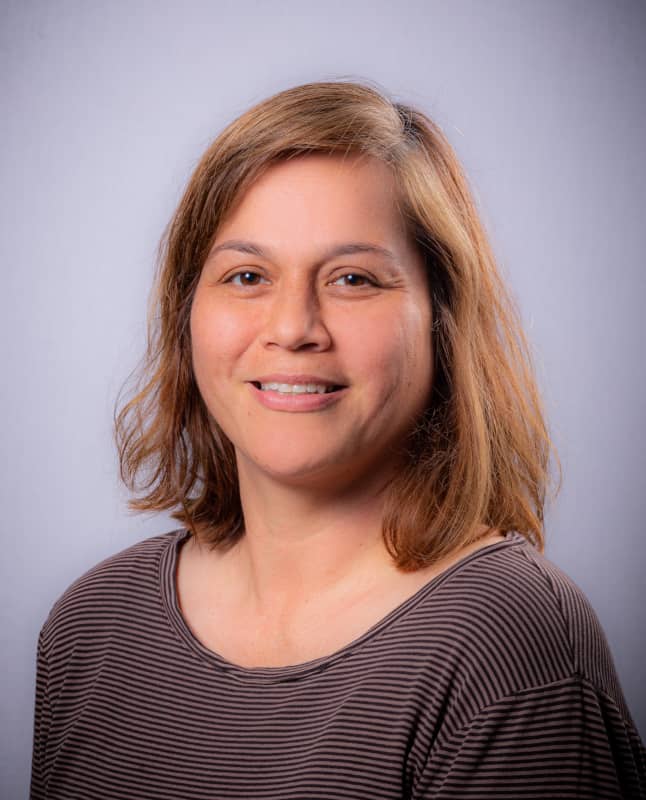
Like many CHamorus in Guam, Dr. Tricia Lizama grew up with a strong family presence. She was raised in an intergenerational home with her parents and grandparents. Her grandmother had 11 sisters who all lived on the same property, so extended family was always close by. Their homes were filled with conversations in CHamoru, and on every kitchen stove was a pot of åmot, traditional medicine made from various plants.
But åmot wasn’t just used to treat ailments like stomachaches or the flu; it was a daily act of care and maintenance.
“In our refrigerator, there was either water, åmot, or Tang. Tang was for special occasions, but you couldn’t drink your Tang if you didn't drink your åmot first,” Lizama recalls with a laugh. “That was just part of our life.”
She didn’t realize it at the time, but Lizama’s early experiences with åmot—the simmered leaves and roots and flowers that were steeped in tradition and family—would significantly shape her future work as a social worker, educator, and cultural advocate.
Branching Out
While Lizama is a professor of social work and has been teaching at the University of Guam for almost 15 years, her academic path wasn’t always a clear one.
Her grandparents made sure she knew education was important, but they never forced
it, emphasizing instead the need for her to be a productive member of the community.
The expectation to simply give back became a guiding principle for Lizama.

After high school, Lizama attended UOG and though she was initially unsure of what she wanted to major in, she was certain of one thing: “I did know that I wanted to be a helper. Like, absolutely, I knew that I wanted to help others.”
Lizama ended up earning double degrees in psychology and social work in 1997, and with encouragement from mentors like Dr. Gerhard Schwab (who she would later teach alongside with at UOG), she moved off island to pursue graduate studies in Hawaiʻi.
The decision was a tough one, as it was Lizama’s first time away home, and she was reluctant to leave her aging grandfather, especially since her grandmother had already passed away years earlier. But Lizama was determined to push herself further and promised her grandfather that when she returned, she would land a steady job and start giving back.
Maintaining Connections
True to her word, when Lizama came back to Guam with her master’s degree in social work, she began building a robust professional career. She provided counseling for children with emotional disabilities, joined the Air Force Reserve, and taught as an adjunct for UOG, all roles that were in service to others, effectively fulfilling her grandparents’ hopes that she would contribute to the island that raised her.
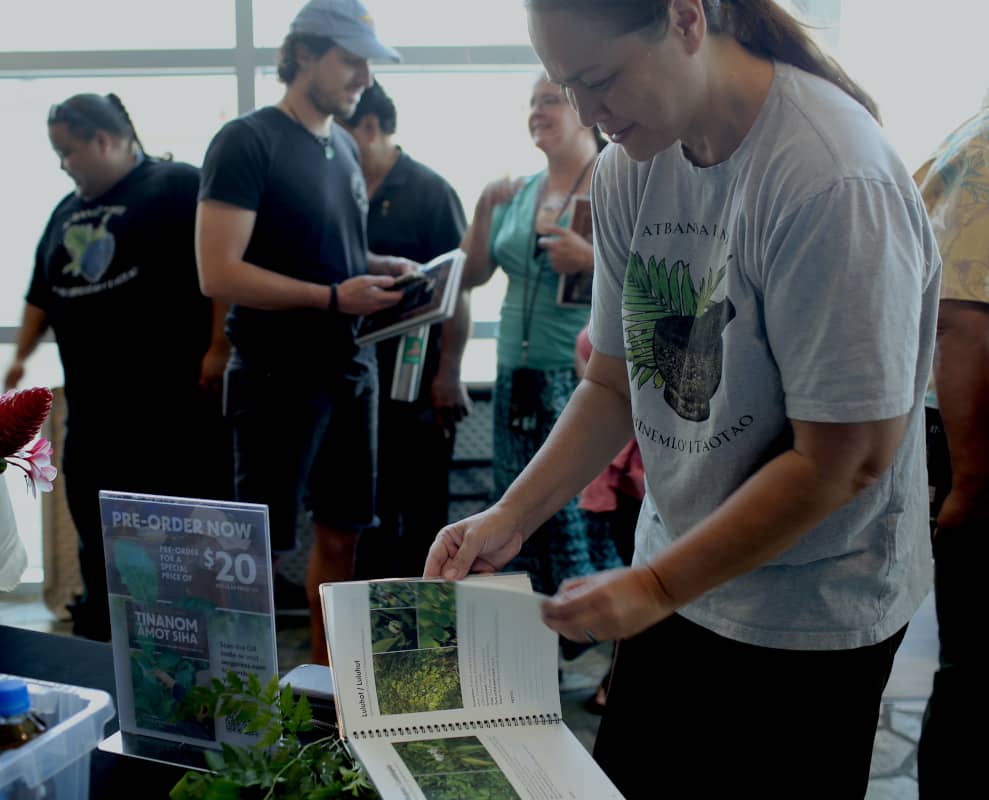
Lizama maintained her connection to her roots as she went back to school for her Ph.D. When time came to work on her dissertation, the decision to focus on åmot and traditional healing was one that was grounded in personal history and cultural identity.
“When my grandma died, nobody really explained anything that she did. Why did she make åmot? How did she learn?” says Lizama. “The grief of losing her and her role as the family matriarch was huge, so I decided I was going to use my dissertation as a form of healing.”
Although she could no longer talk to her grandmother, Lizama knew she could talk to
others with the knowledge of åmot practices and recognized how important it was to
do so. “CHamoru society is largely oral. We love to tell stories, but who’s documenting
all of it?”
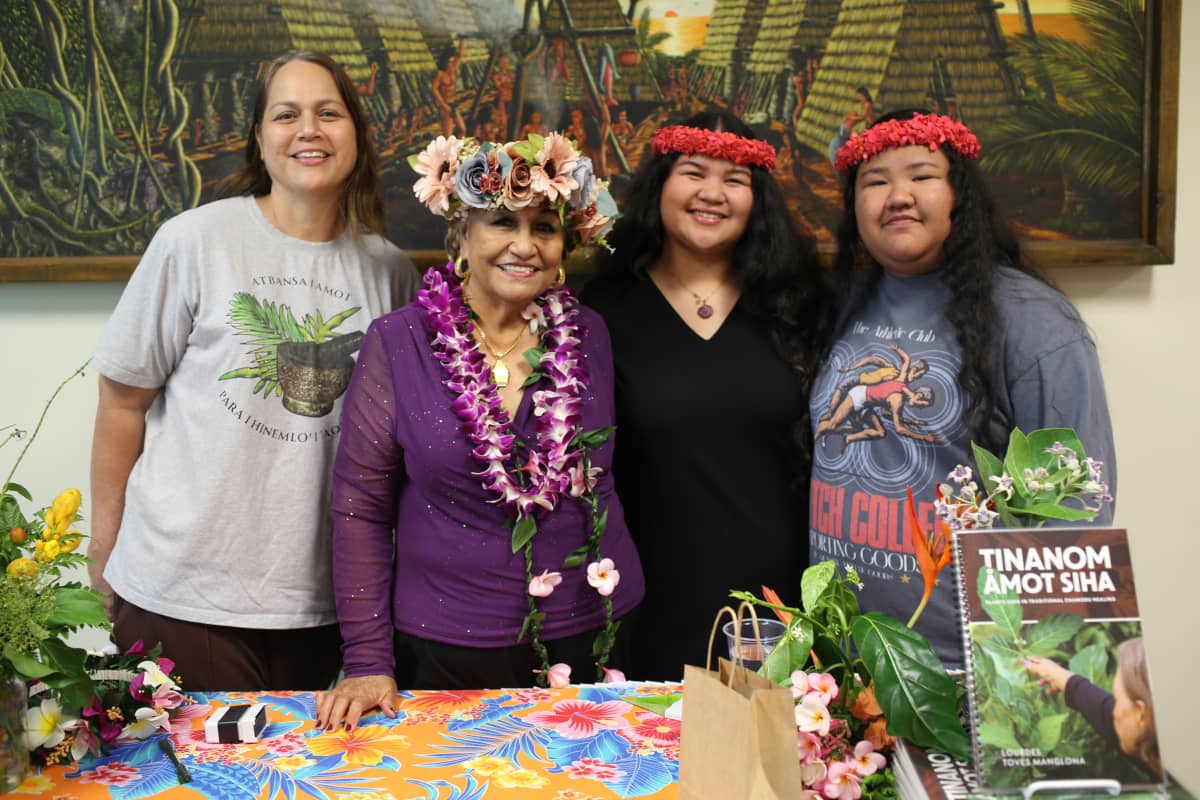
In taking up the task to research traditional healing, Lizama interviewed a dozen practitioners. Many were initially hesitant to speak with her, worried she wanted their recipes, but she clarified it was their stories and their philosophies of care that she was hoping to record and share.
The conversations inspired Lizama to continue the work even after she earned her Ph.D.
Through grants and partnerships, she interviewed over 40 traditional healers across
Guam and the neighboring islands. As a full-time professor at UOG, she worked closely
with traditional healers Lourdes “Mama Lou” Manglona, Susan Aguon, and the late Francis
Meno to develop three courses on traditional medicine that are now officially part
of the UOG curriculum.
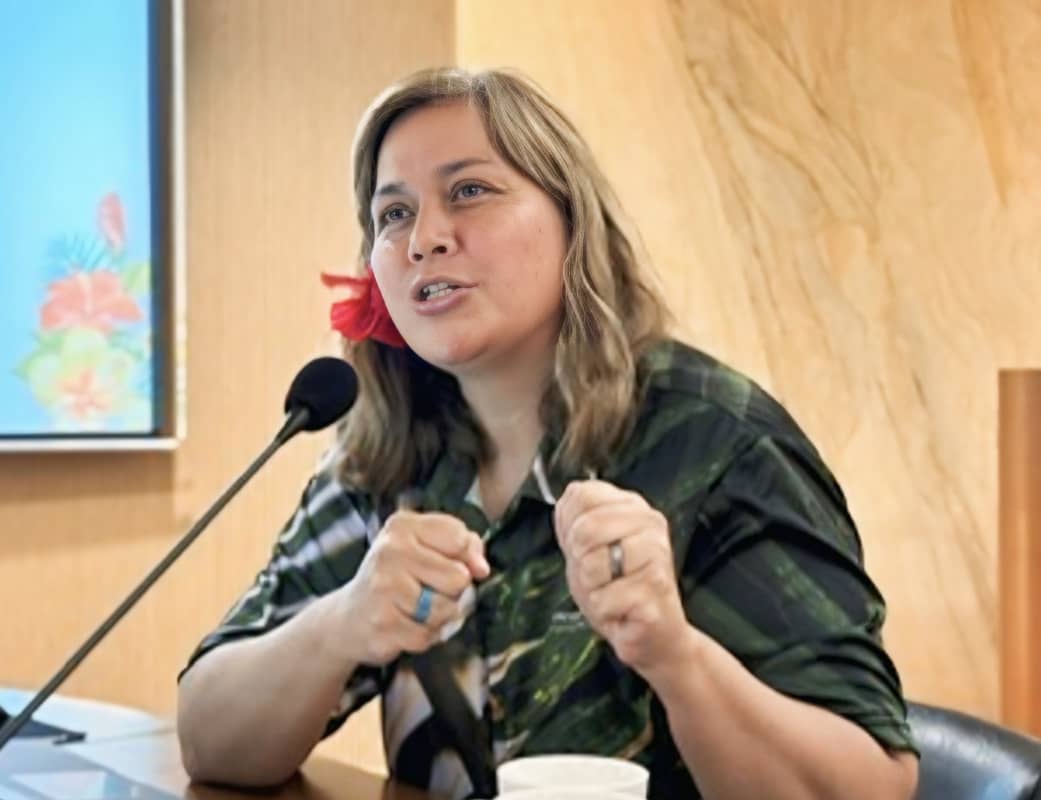
The courses are an example of combining indigenous knowledge and institutional learning, but Lizama stresses that they aren’t intended to make anyone a healer overnight. “It takes a lifetime,” she points out, but the goal is to help students understand the philosophy behind the practice and to approach it respectfully and responsibly.
A Living Practice
As Lizama continues teaching at UOG and collaborating with traditional practitioners to help preserve the knowledge of åmot, she is constantly reminded that healing comes in many forms. Beyond the physical, it can also be spiritual, emotional, and of course, communal.
It is this realization that motivates her in the work she dedicates herself to. “There is more than one way to help people,” Lizama affirms with a knowing smile.