
UOG brings critically endangered håyun lågu back to the wild
UOG brings critically endangered håyun lågu back to the wild
UOG brings critically endangered håyun lågu back to the wild
3/27/2026
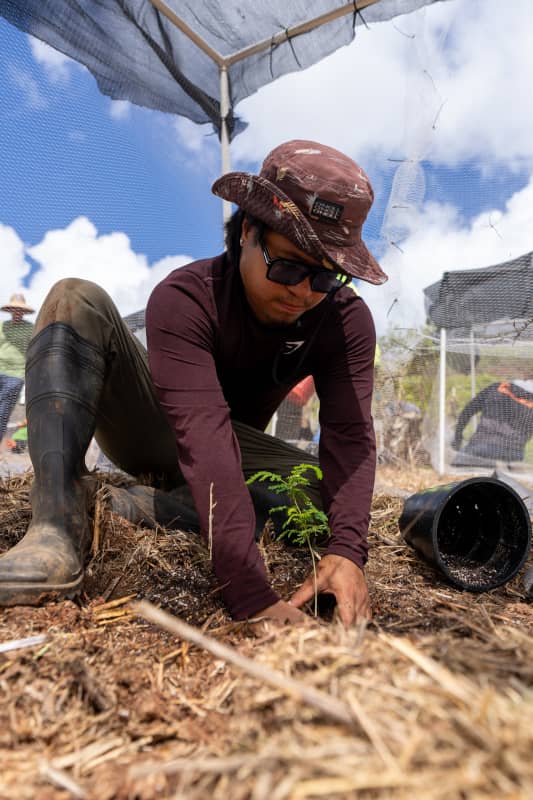
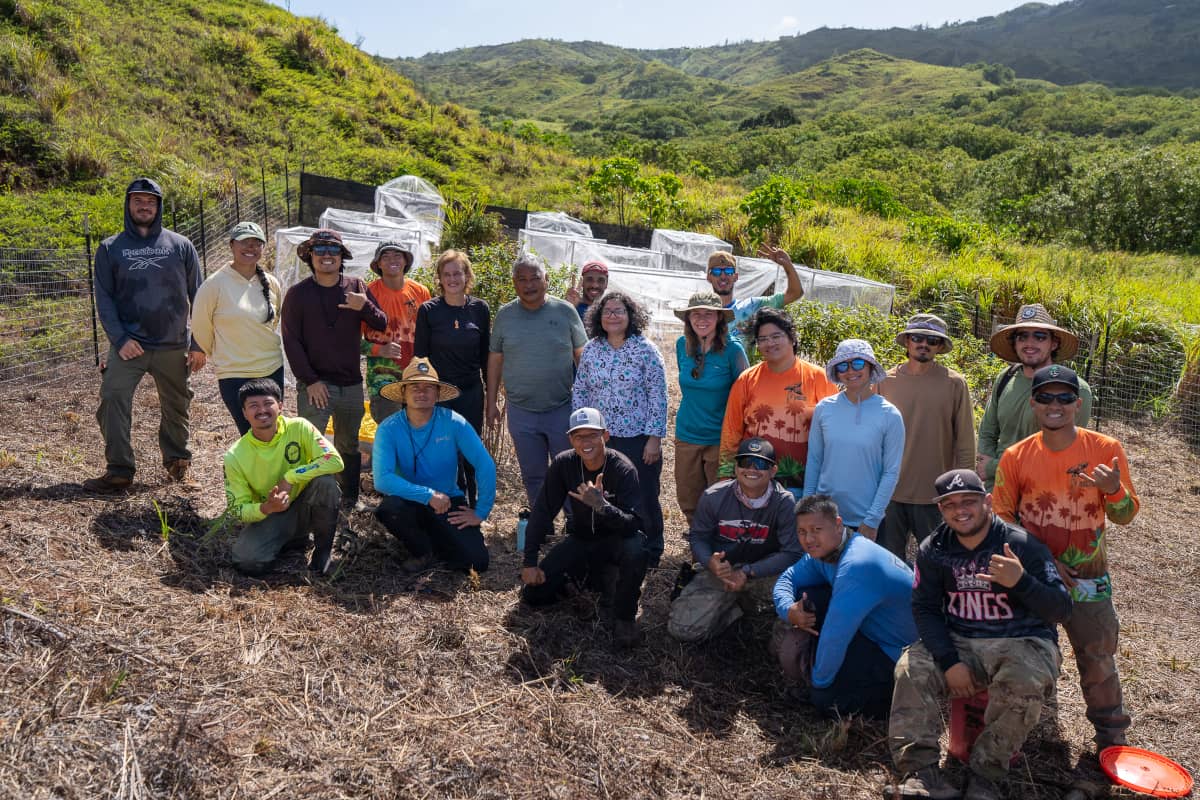
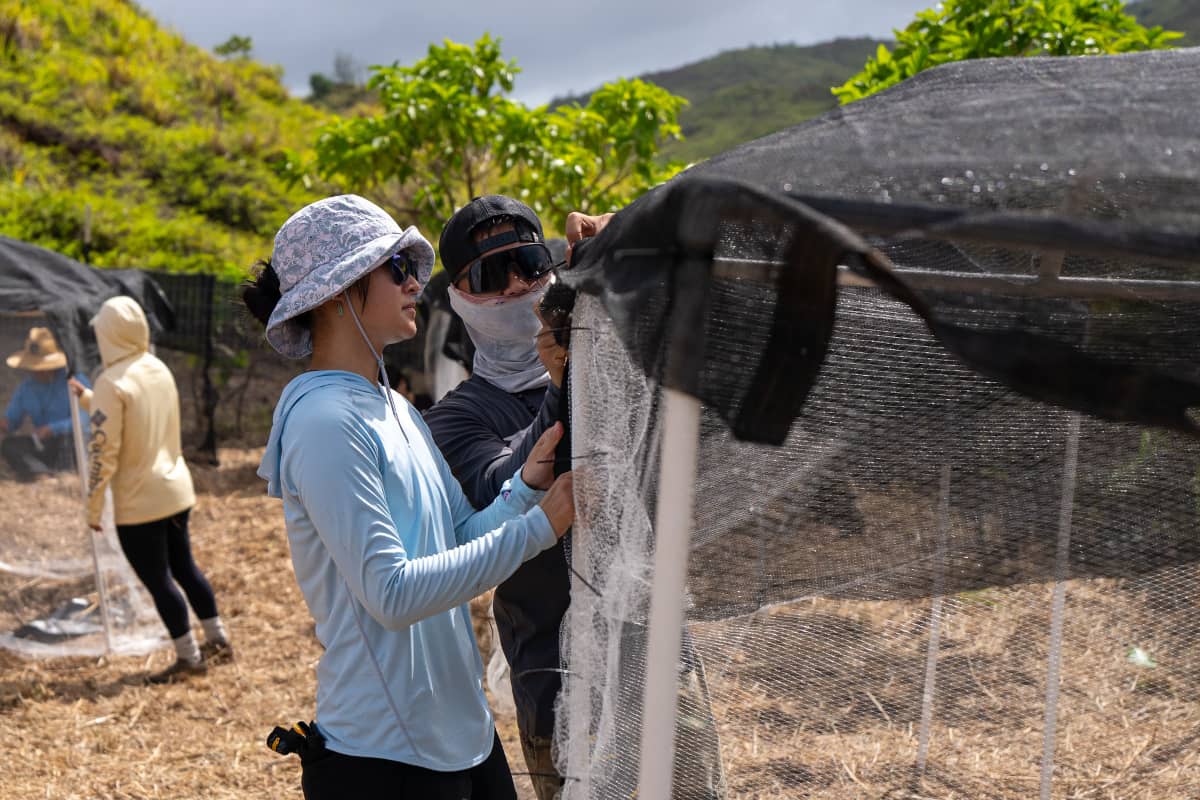
The University of Guam Center for Island Sustainability & Sea Grant (UOG CIS & Sea Grant) Natural Resources division, alongside the Guam Preservation Trust (GPT) and the U.S. Fish & Wildlife Service (USFWS), hosted an outplanting event at the Atantåno Heritage Preserve in the village of Santa Rita.
The planting event focused on bringing the critically endangered Serianthes nelsonii, an endemic tree species found only on Guam and Rota, back to the wild. Locally, it is known as “håyun lågu” in Guam and “tronkon guåfi” in Rota.
Associate Director for UOG CIS & Sea Grant’s Natural Resources division, Else Demeulenaere, Ph.D., has been working alongside her team in the Island Conservation Lab (ICL) to return the Serianthes nelsonii seedlings back to its natural habitat.
“Our program manager Vince Fabian and I acquired tronkon guåfi seeds from the island of Rota with the help of Rota Forestry, who were instrumental in our team being able to bring these seedlings to Atantåno,” said Demeulenaere.
Additionally, Demeulenaere says that although the Serianthes nelsonii in both Guam and Rota are similar, they have unique genotypes that differentiate those found on one island from the other.
According to Fabian, Serianthes nelsonii once grew throughout southern Guam but today, are critically rare due in part to heavy damage from insect pests that attack the trees at vulnerable stages.
“The team added pest cages around every single tree to give them a fighting chance,” said Fabian. “Interns play an important role in this effort, helping monitor the trees regularly and contributing to the long-term recovery of the species.”
According to Demeulenaere, partnerships and collaborations with sustainability partners like Rota Forestry, GPT and the community at large are imperative to the success of projects such as this. “Public access and regular hikes at Atantåno help connect people with the islands’s natural resources and strengthen stewardship.”
Senator Sabina Perez joined the planting of the trees, marking the occasion with personal significance. She shared that she feels a special connection to this species because her mother grew up in the Tarague area and often told her stories about the tree. Planting one herself was a meaningful moment, she said, as it reconnects her to her roots and honors her cultural heritage.
“This is really our plantcestor. When we talk about håyun lagu, håyun means wood and lagu means north, but it can also carry the meaning of something that comes from afar. When we think about it in this way, it becomes a symbol of our origins,” added Perez.
As the new year unfolds, the UOG CIS & SG’s Natural Resources division will continue introducing more endemic plant species to the Atantåno Heritage Preserve, following earlier outplantings of Cycas micronesica or fadang.
More information about the program and the work of the University of Guam Center for Island Sustainability and Sea Grant can be found online at uog.edu/seagrant or on social media @uogcis or @uogcis.islandconvervationlab on Instagram.