

Guam Center for Biodiversity Research
Guam Center for Biodiversity Research
Guam Center for Biodiversity Research
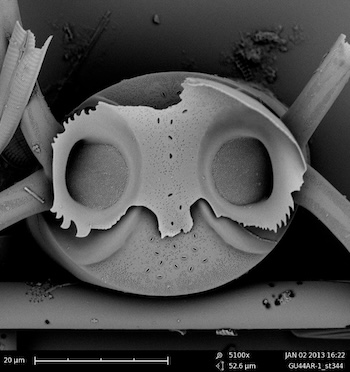
GCBR
The Guam Center for Biodiversity Research (GCBR) was established in 2025 to combine six University of Guam biological collections under one digital and collaborative roof.
These collections include: 1) Diatoms; 2) the Herbarium; 3) Ichthyology; 4) Invertebrate Zoology; 5) Macroalgae; and 6) Tissues.
GCBR’s mission is to serve local and scientific communities by providing baseline data and surveys to understand and protect regional natural resources. We discover and document life, and disseminate our work freely. We also aim to inspire everyone to behold and cherish our diverse and complex natural world.
Curator of Crustacea
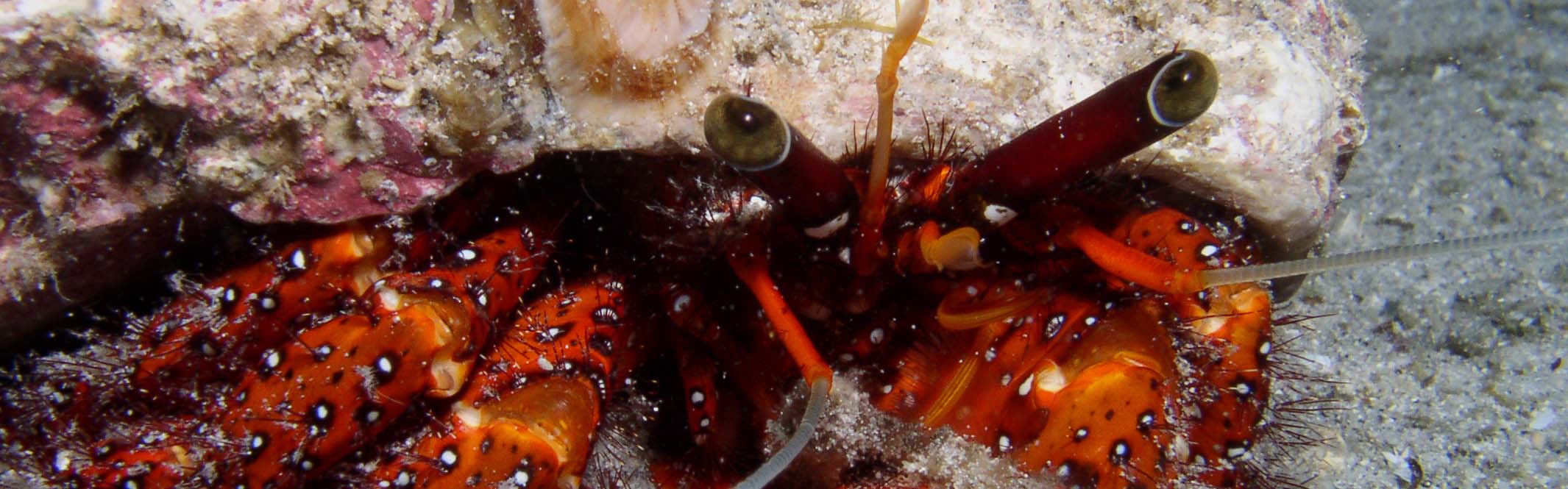
Dr. Robert Lasley's research focus is on your favorite animal—the crab. Understanding crab systematics, diversity, and speciation provides a unique window into evolution. Brachyuran (true) crabs are incredibly diverse in terms of morphology, habitat, and behavior. The largest species has been recorded at ca. 600 m depth and has a leg span of almost 4 meters. The smallest has a carapace between 2-3 mm wide and spends its adult life inside its clam host.
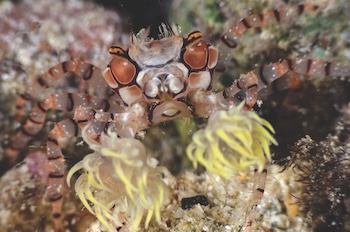
Crabs are unusual in having colonized land many times since their relatively recent Jurassic origin. Some have lost their marine larval stage and have invaded even montane ecosystems, where they have diversified.
Gall crabs somehow induce their coral hosts to form their dwellings. Members of several crab families have evolved a similar morphology to live as symbionts with diverse burrowing hosts like shrimp and worms.
Boxer crabs carry stinging anemones like weaponized pom poms. Crabs go everywhere. They do everything. It’s no wonder that they are the pinnacle of evolution (search “carcinization”).
Collections Manager
David Burdick serves as Collections Manager for the Guam Center for Biodiversity Research. After participating in a three-year NOAA fellowship program that began in 2004, he worked on various aspects of coral reef management, research, and monitoring while employed with the Guam Coastal Management Program.
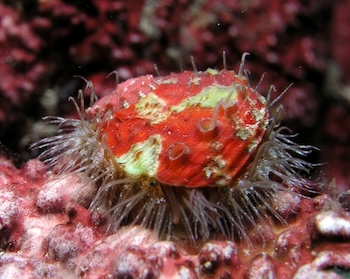
David moved to UOG in 2013 to continue work as coordinator of Guam’s long-term coral reef monitoring program, and in 2016 began splitting his time between coral reef monitoring and collections management.
He transitioned to a full-time collections management role for the GCBR in November 2025. In addition to his core responsibilities as collections manager, he is actively involved in coral taxonomy and diversity, with a specific interest in determining the identity and conservation status of threatened corals in the Mariana Islands. His passion for marine biodiversity and underwater photography led him to create the guamreeflife.com website in his spare time, with the aim of raising awareness of the marine biodiversity of the Mariana Islands.
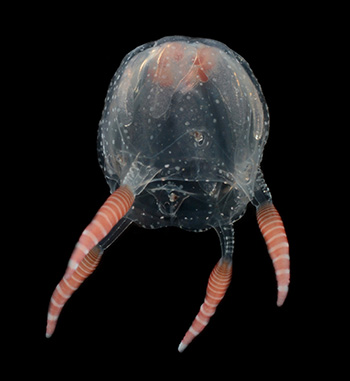
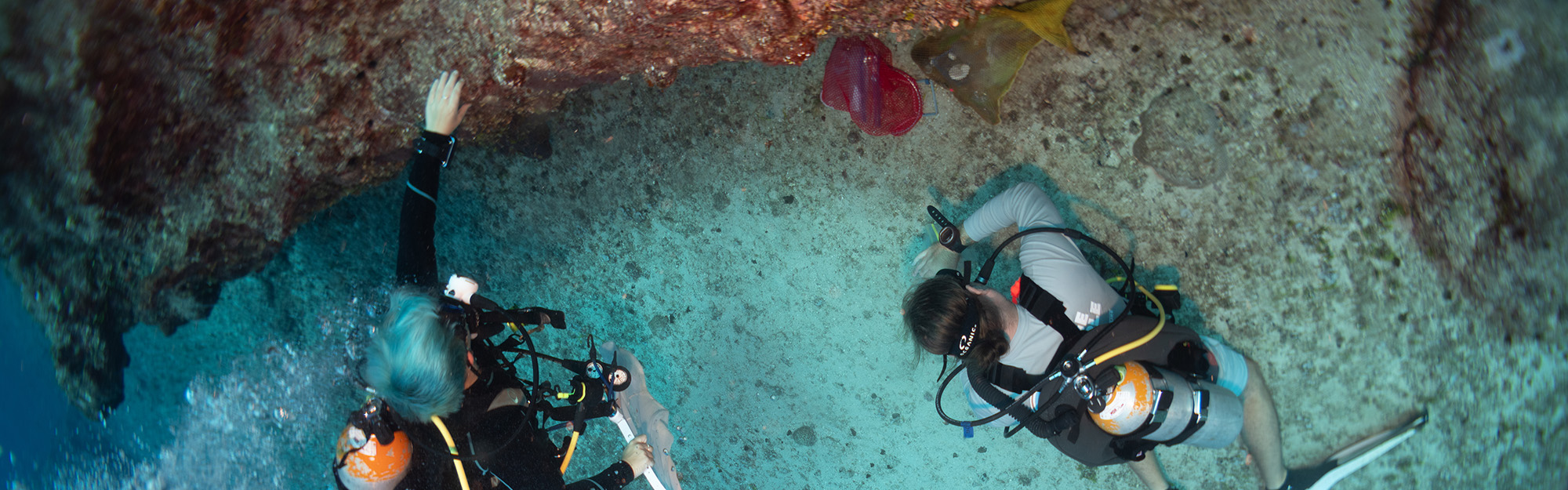
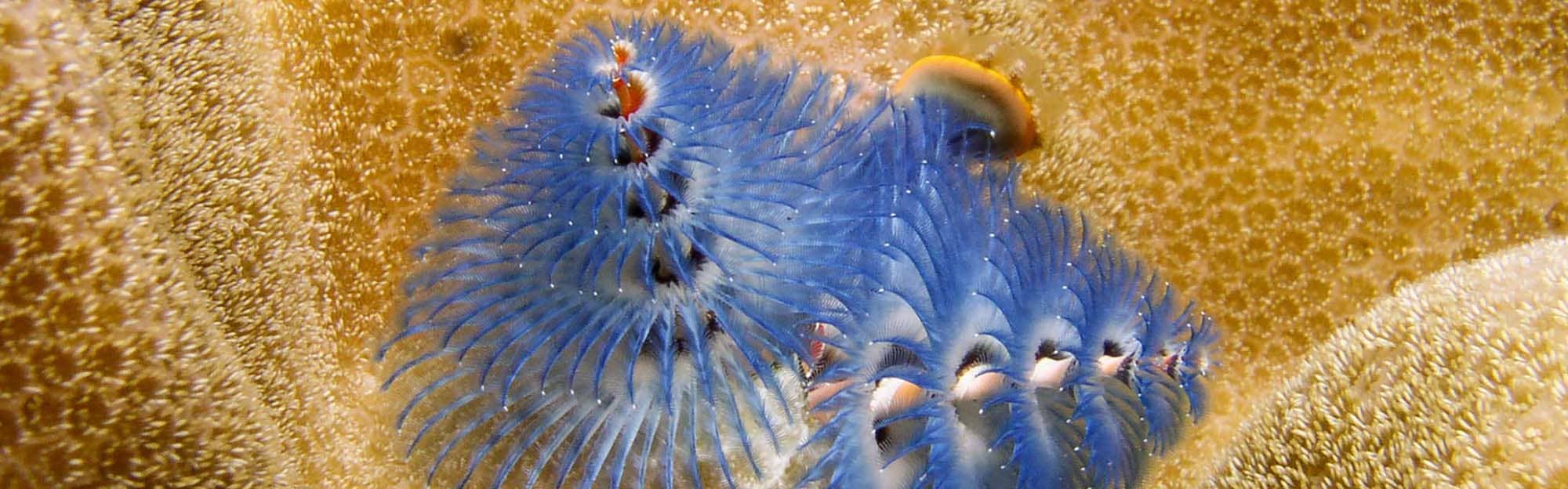
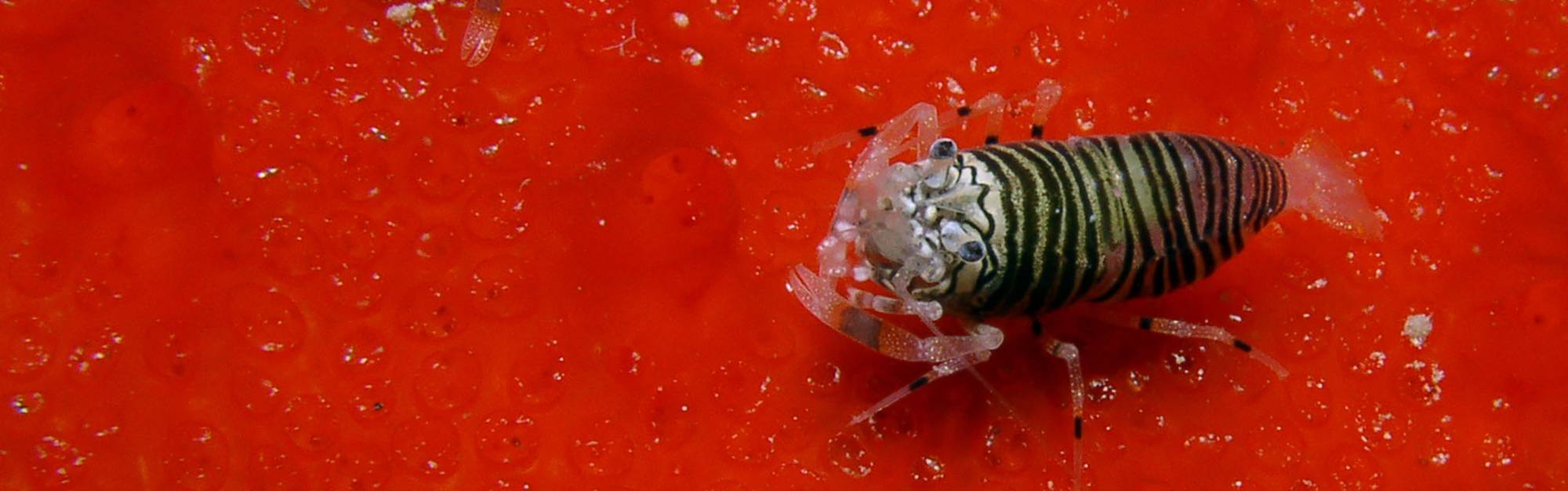
GCBR’s Invertebrate Zoology (IZ) collection houses specimens across animal diversity—shrimps, slugs, brittle and sea stars, crabs, corals, ribbon and scale worms, clams, sea squirts, moss animals, and many, many more (but not vertebrates).
Our goal is to document life with live coloration photos, voucher specimens, tissue samples, DNA sequences, and associated habitat and locality data. This library of life fuels discovery and research across disciplines.
IZ has grown rapidly in the past few years, thanks to an influx of staff and support from our partners at NAVFAC and NSF EPSCoR, and we are open for business. Please reach out for specimen loans or questions, and visit our online portal to search our database.
We aim to freely provide valuable baseline data to understand and protect our fragile marine and terrestrial ecosystems and inspire connection with the limitless complexity and beauty of our diverse world.
Tibirica, Y., D. Eisenhauer, D. Burdick, and R. Lasley. Jr. 2025. First record of multi-species synchronized sea cucumber spawning in the Mariana Islands. Marine Biodiversity 55:104.
Church, S., and 42 other authors. Accepted upon revision by Current Biology. Global genomics of the man-o’-war (Physalia) reveal biodiversity at the ocean surface.
Rios, D., H. Torrado, S. Lemer, L. Raymundo, C. Drury, D. Burdick, and D. Combosch. 2025. Population genomics for coral reef restoration: A case study for staghorn corals in Micronesia. Evolutionary Applications 18:e70115. https://doi.org/10.1111/eva.70115
Myers, R., D. Burdick, B. Mundy, S. Lindfield, B. Tibbatts, and T. Donaldson. 2025. New and recent records of fishes from the Mariana Islands, western Pacific Ocean. Journal of the Ocean Science Foundation 42:7–82.
Torrado, H., D. Rios, K. Primov, D. Burdick, B. Bentlage, S. Lemer, and D. Combosch. 2025. Evolutionary genomics of two co-occurring congeneric fore reef coral species on Guam (Mariana Islands). Genome Biology and Evolution 17(1): evae278. https://doi.org/10.1093/gbe/evae278
Primov, K., D. Burdick, S. Lemer, Z. Forsman, and D. Combosch. 2024. Genomic data reveals habitat partitioning in massive Porites on Guam, Micronesia. Scientific Reports 14, 17107 (2024). https://doi.org/10.1038/s41598-024-67992-w.
Ahuja, N., X. Cao, D. Schultz, N. Picciani, A. Lord, S. Shao, K. Jia, D. Burdick, S. Haddock, Y. Li, and C. Dunn. 2024. Giants among Cnidaria: Large nuclear genomes and rearranged mitochondrial genomes in siphonophores. Genome Biology and Evolution 16(3): evae048. https://doi.org/10.1093/gbe/evae048.
Combosch, D., D. Burdick, K. Primov, D. Rios, J. Fernandez, and K. Rios. 2024. Barcoding and mitochondrial phylogenetics of Porites corals. PLOS ONE 19(2): e0290505. https://journals.plos.org/plosone/article?id=10.1371/journal.pone.0290505.