NextGen COMPASS delivers high-impact experiential internships for 48 students in the fanuchånan semester
NextGen COMPASS delivers high-impact experiential internships for 48 students in the fanuchånan semester
NextGen COMPASS delivers high-impact experiential internships for 48 students in the fanuchånan semester
2/16/2026
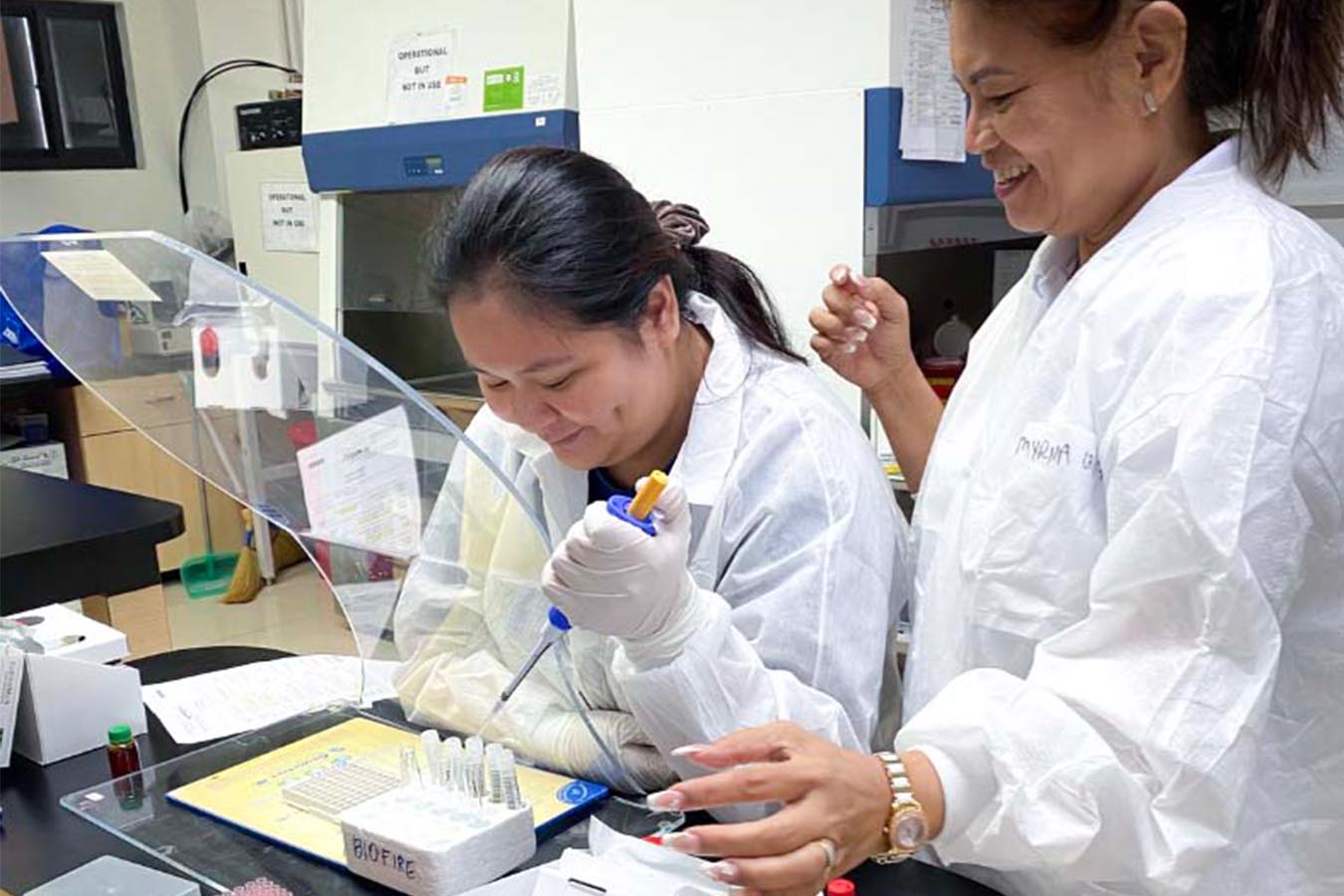
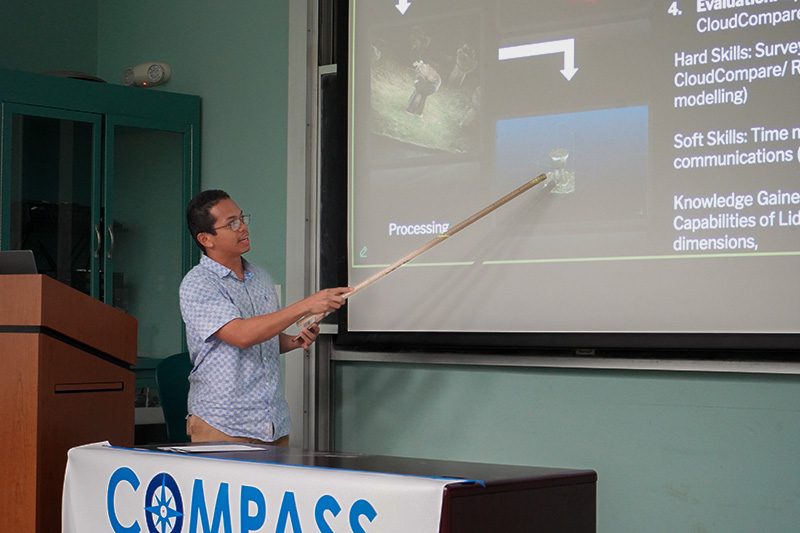
The NextGen COMPASS Program at the University of Guam concluded a successful Fanuchånan (Fall) 2025 semester connecting 48 University of Guam students with high-impact experiential learning opportunities in agriculture, natural resource management, chemistry and biology, engineering, and health science.
Over a 16-week period last semester, participating students completed an average of 213 paid internship hours each, gaining professional experience while strengthening skills critical to career readiness, including research methods and technical skills, oral and written communication, and teamwork.
Part of the U.S. Department of Agriculture’s nationwide NextGen initiative, the COMPASS Program at UOG is designed to strengthen local and regional talent pipelines for addressing pressing issues, such as food security, environmental sustainability, public health, and climate resilience. The program aims to create supported pathways from education into the workforce through hands-on internships and applied research experiences.
Preparing students across disciplines for needed fields
 The NextGen COMPASS internships engage students from a wide range of majors — from
those directly related to USDA’s work, like agriculture, chemistry, and biology, but
also from the fields of communications, accounting, education, and business administration.
This diversity reflects a core objective of USDA NextGen programs nationwide, which
is to increase participation in agriculture and STEM fields by engaging students across
disciplines and backgrounds.
The NextGen COMPASS internships engage students from a wide range of majors — from
those directly related to USDA’s work, like agriculture, chemistry, and biology, but
also from the fields of communications, accounting, education, and business administration.
This diversity reflects a core objective of USDA NextGen programs nationwide, which
is to increase participation in agriculture and STEM fields by engaging students across
disciplines and backgrounds.
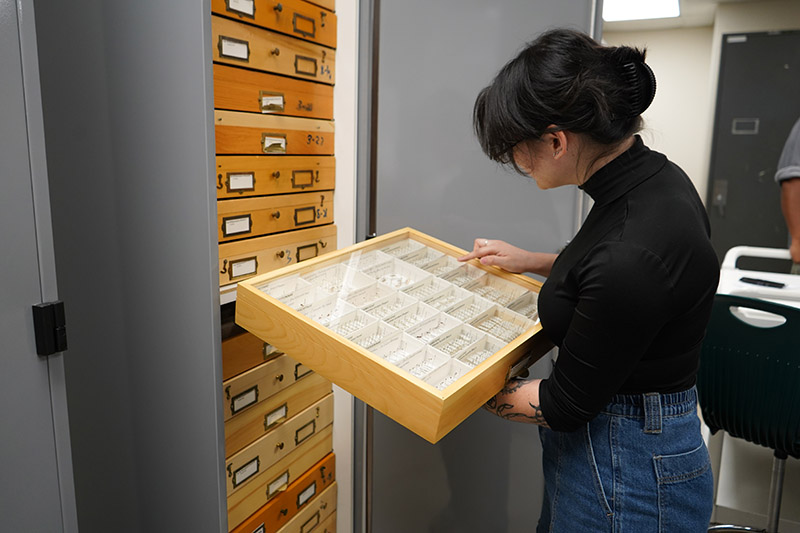
Internship and research projects addressed applied, real-world needs, ranging from forensic science and entomology collection restoration to native plant propagation. Engineering and materials science projects examined fiber-reinforced polymer bars for Guam’s civil infrastructure, recycled plastic lumber, PET extrusion processes, and 3D LiDAR modeling of latte structures.
Several of the students completed internships within the University of Guam, working with Triton Farm and the agricultural research laboratories in the College of Natural & Applied Sciences, with the 4-H Youth Development Program, and at the Marine Laboratory, the Center for Island Sustainability, and the Water & Environmental Research Institute.
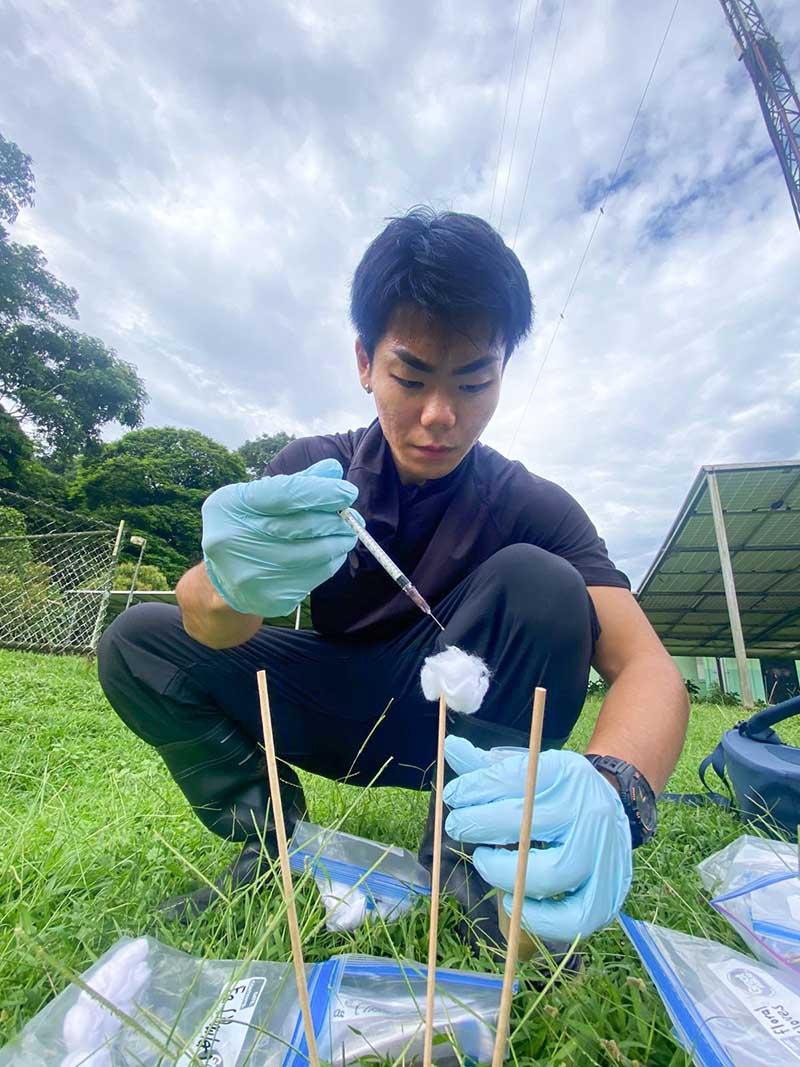 Others participated in off-campus opportunities at the Guam Department of Agriculture,
the Department of Public Health & Social Services, the Guam Police Department’s Forensic
Science Division, the National Park Service, the Guam Native Plant Society, and Guam
Regional Medical City. And two attended a rigorous field-based program in Costa Rica
hosted by the Organization for Tropical Studies, a global leader in tropical research and experiential learning.
Others participated in off-campus opportunities at the Guam Department of Agriculture,
the Department of Public Health & Social Services, the Guam Police Department’s Forensic
Science Division, the National Park Service, the Guam Native Plant Society, and Guam
Regional Medical City. And two attended a rigorous field-based program in Costa Rica
hosted by the Organization for Tropical Studies, a global leader in tropical research and experiential learning.
“It was really cool. I got to formulate my own project — from coming up with the idea [of what I wanted to research] to making the methodology. It kind of gave me evidence of what a master’s program might be like,” said William Minami, who participated in the study-abroad program in Costa Rica.
Across placements, students worked directly with faculty, researchers, and professionals, gaining practical experience in field and laboratory research, data analysis, environmental monitoring, and community engagement — skills central to USDA’s national workforce development goals.
“During my time as a NextGen intern, I learned a lot through hands-on experiences that helped me develop both my professional and personal skills,” said Deavonie David, a business administration major. “This internship exposed me to real-world work environments, strengthened my communication skills, and taught me the importance of teamwork and responsibility.”
Benjamin Snaer, a dual chemistry and biology major, said the program reinforced his interest in research.
“My experience as a NextGen intern has given me valuable lab skills from research and project planning all the way to presentation and outreach,” he said. “This experience has furthered my consideration for a research-based career in biochemistry.”
Continuing through 2028
As a five-year program funded through May 2028, NextGen COMPASS will continue to connect UOG’s students with place-based, interdisciplinary training that can prepare them for leadership roles that support the region’s communities through its agricultural and STEM workforce.
Interested in an internship with NextGen COMPASS?
Visit the NextGen COMPASS internships webpage here, or contact Dr. Rachel Jolley at rachel.jolley@triton.uog.edu or Dr. Kate Moots at kmoots@triton.uog.edu.