Tåotao Tritons: Acts of Adornment: Elizabeth M. Rutun and the Craft of Lei-Making
Tåotao Tritons: Acts of Adornment: Elizabeth M. Rutun and the Craft of Lei-Making
Tåotao Tritons: Acts of Adornment: Elizabeth M. Rutun and the Craft of Lei-Making
5/22/2026
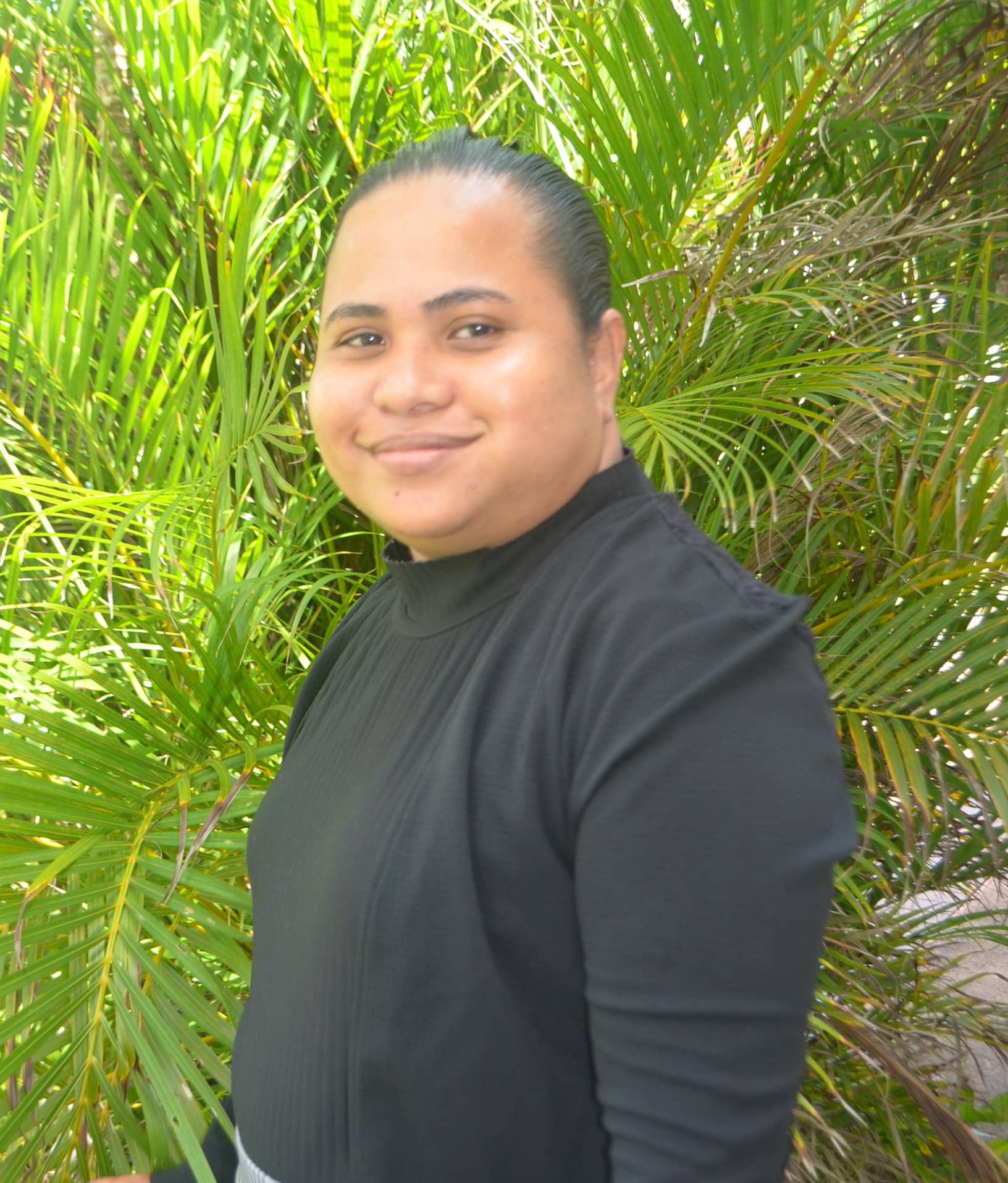
Amidst the sea of black regalia customary at every University of Guam commencement, vibrant pops of color exist in the form of leis. Whether haloes of fuchsia bougainvillea sitting atop the heads of beaming graduates or cords of golden orchids hanging gracefully from their necks, there is never a shortage of these celebratory symbols. More often than not, a fair number of these adornments were crafted by Professor Elizabeth Midil Rutun, hereby referred to as Midil, a 2018 UOG alumna and Instructor of English who imbues both care and intention in every lei she makes.
Petal Picking and Practice
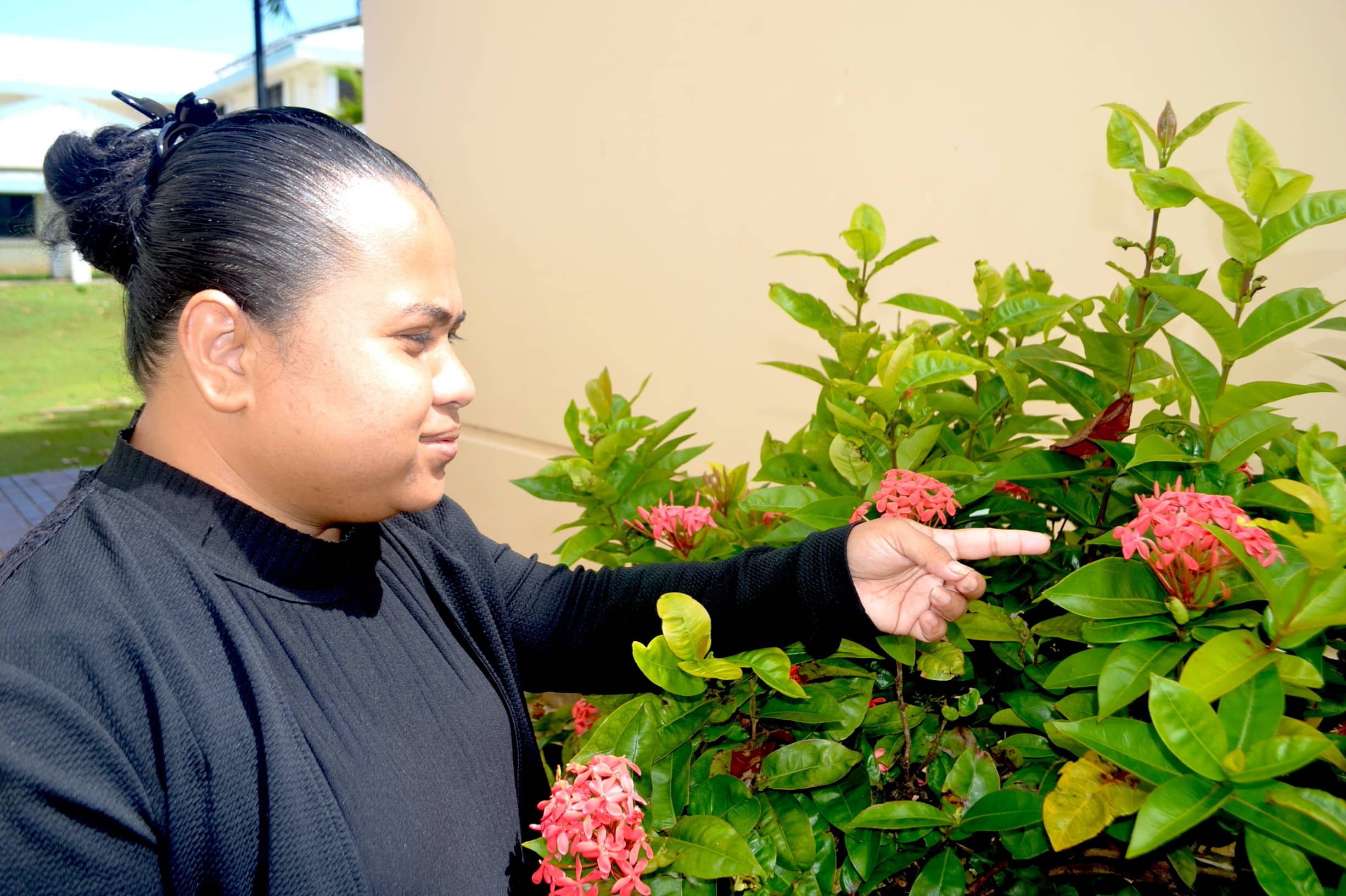
Long before Midil was making leis for special occasions like graduations, she was a young girl in Yap with a penchant for walking around the village, picking flowers from people’s yards—and getting scolded for it.
“You're not supposed to because every parcel of land belongs to somebody, so it's like you're picking someone's property, and even if it's a flower and I'm a kid, I would always get in trouble,” Midil recalls.
“But then my mom said, ‘You know, if you're going to take people's stuff, you better not take it for no good reason.’”
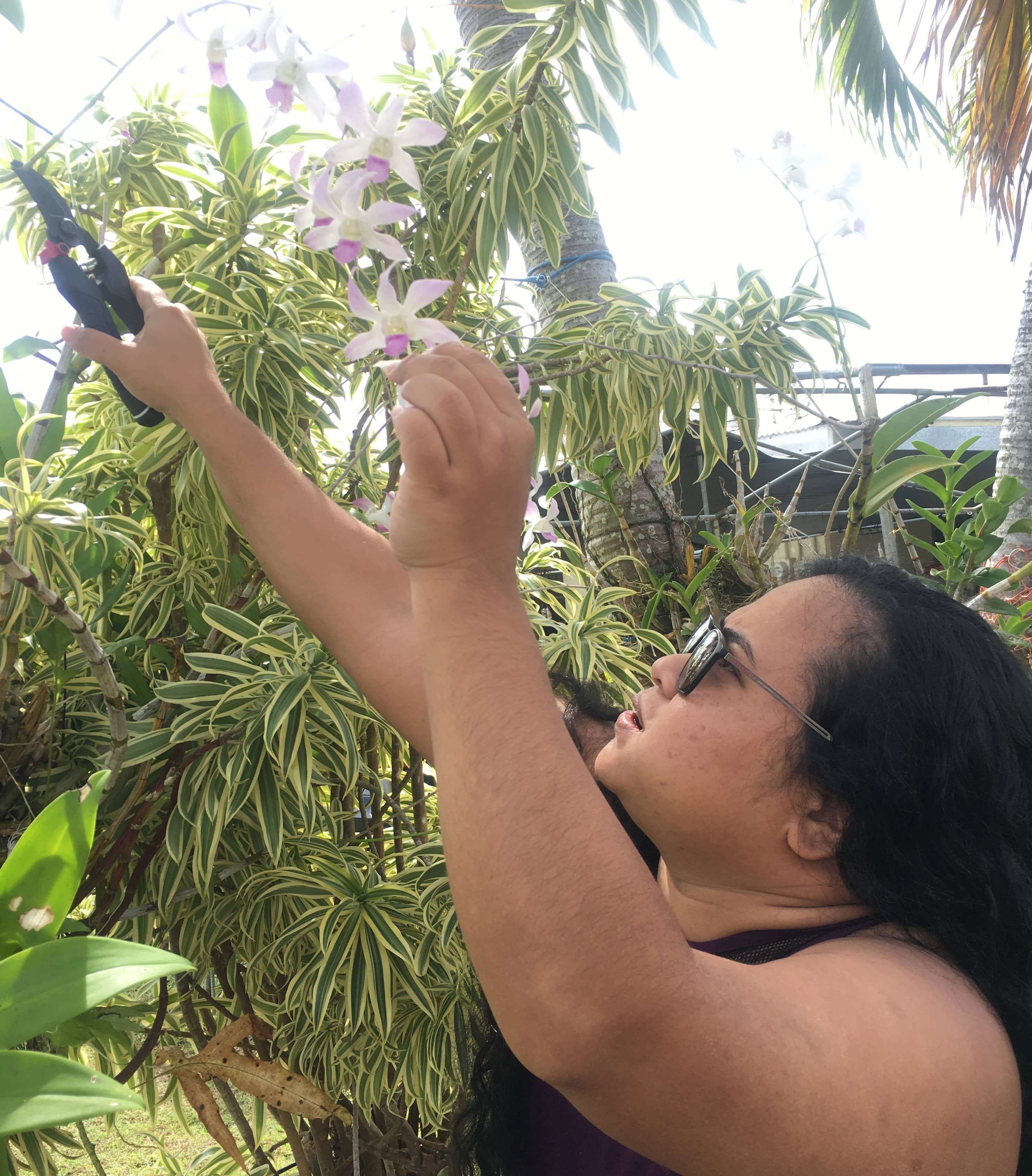
She began learning how to make leis by watching family members like her older sister. Soon, she was being asked to make them for the tourists who would visit the island on guided tours.
“The leis looked so, so bad,” Midil admits with a laugh, “but the tourists were really impressed by them and would give me 10, 20 bucks.”
Through time, practice, and trial and error, Midil developed her style, along with
an acute understanding of how there is always room to improve her skills. Feedback
from other lei makers has made such learning experiences possible, and even if the
critiques sometimes sting, Midil takes them as valuable opportunities to see her work
through others’ eyes.
More Than Just a Pretty (Flower) Face
The Yapese refer to leis, whether they are worn around the neck or as headpieces, as nunuw, the literal translation meaning “adornment.”
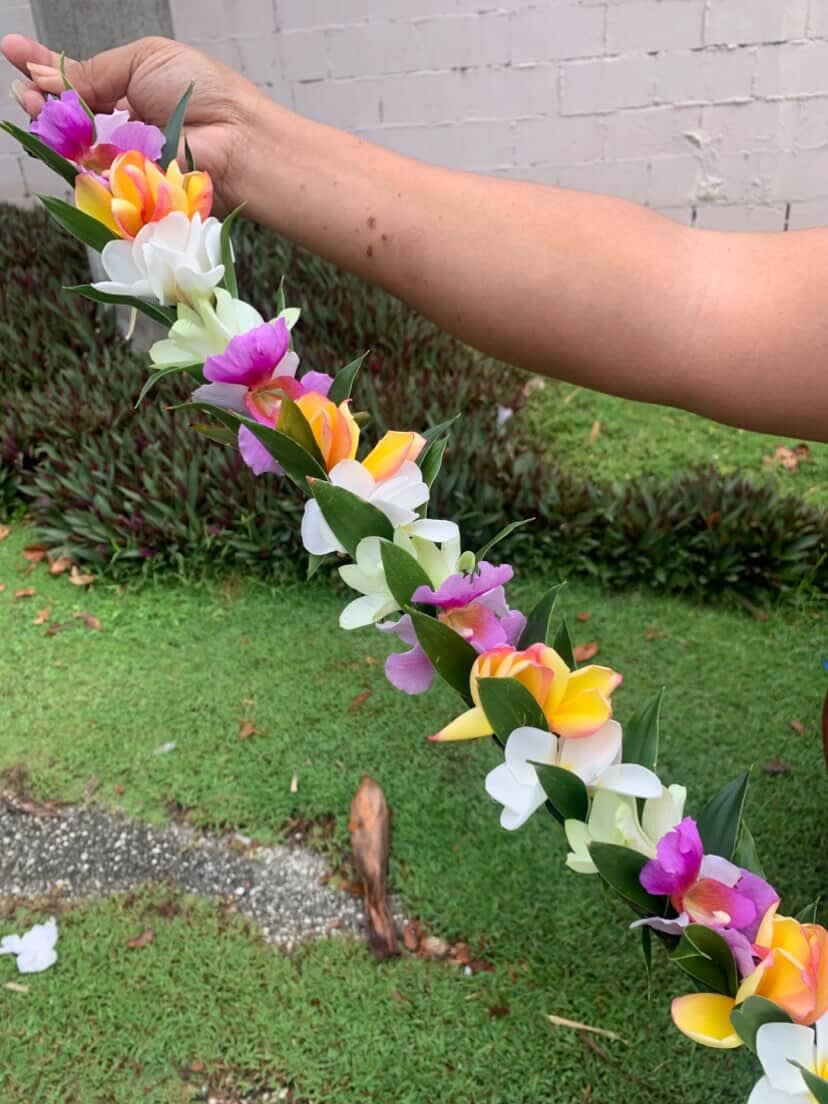
Midil takes this description to heart in how she approaches her creations, especially since moving to Guam in 2016 and making leis for local audiences.
“The idea is the lei isn't supposed to be the star of the show. In the Yapese way of using them and making them, they're supposed to hide the flaws of the person while illuminating their best parts,” she says.
Midil factors in specifics such as the wearer’s personality, facial features, and skin complexion to create a final piece that truly highlights the person. If she is unable to get this information, other details are just as useful. The event or occasion in which the lei will be worn, as well as the relationship between the giver and receiver of the lei help inform the creative process.
While most local requests prioritize the leis’ aesthetics, Midil makes it a point to also honor their deeper meaning, which has become a lesson for her in how leis function in different contexts.
“You have an art that you’re now taking to another place, and we’re looking at the
same thing from different angles,” Midil says.
Details That Make a Difference
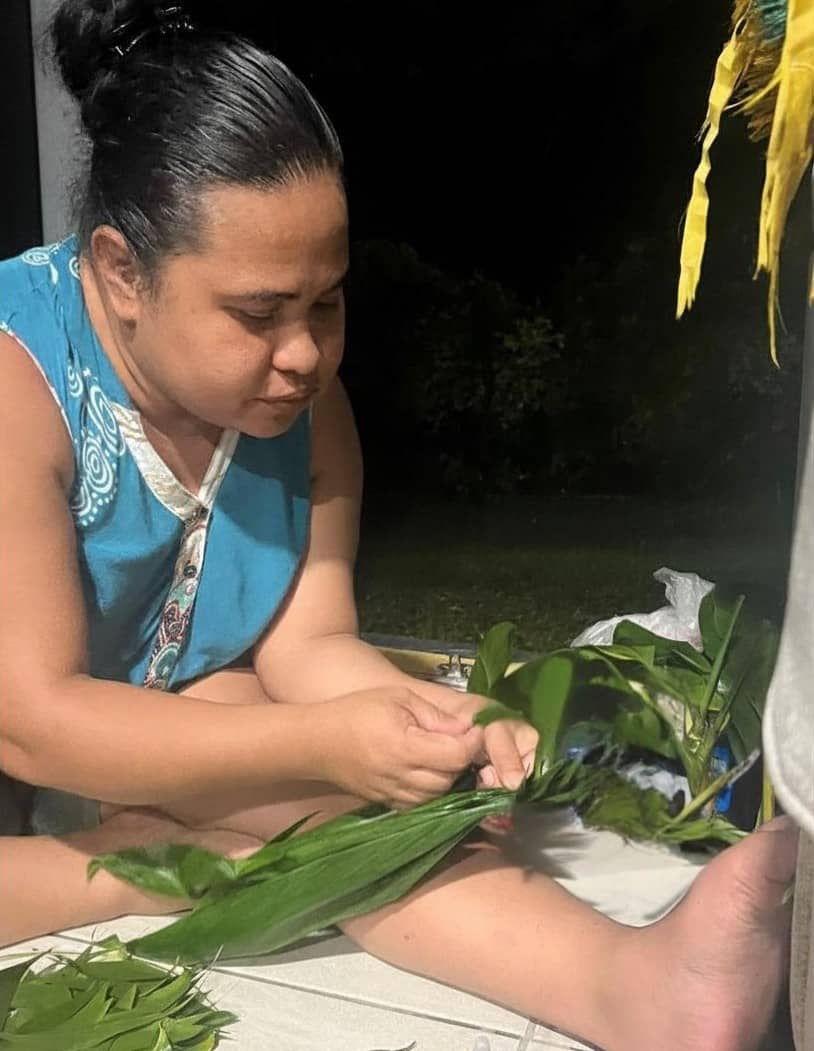
Another aspect of lei-making in which Midil has gained substantial knowledge is the flowers themselves. As expected, color is an important feature to consider, with Midil’s understanding influenced by the Yapese concept of colors being classified as either “alive” or “dead.”
“Usually, brighter colors are ‘alive.’ So, for example, you can have two pink hues. One’s pigment is more complex or saturated, so we describe it as ‘alive.’ The other has less pigment or saturation, making it a ‘dead’ color,” she explains.
When applied to leis, a flower’s color, along with its shape and texture, helps influence whether it enhances the wearer’s features, so Midil pays close attention to such details.
Beyond knowing the characteristics of physical appearance, Midil is also cognizant of flowers’ temperaments—the best time to pick them, how well certain flowers hold up in humid or air-conditioned spaces and for how long, how quickly petals begin to wilt or turn brown.
This knowledge, gained through years of experience and careful observation, helps
Midil create leis that are not only visually striking, but sturdy and long-lasting
as well.
Continuing to Bloom in Opportunities
A decade into making leis in Guam, Midil receives a steady stream of orders throughout the year for various occasions, from birthdays and school events to traditional cultural performances and welcome ceremonies for visiting dignitaries. Understandably, Mother’s Day and graduation season are particularly busy times.
A holiday for which there is a surprising demand for leis? “Thanksgiving,” Midil reveals. “I’ve had people gift my leis to their dinner guests.”
Even with a consistent demand for her work, Midil continues to evolve in her art, experimenting with styles, techniques, and the types of plants she uses. She hopes people can be more open to the possibilities of what leis can look like, such as those made with ferns and even pineapple skin.
Occasionally, Midil receives unique requests that push her creativity further, such as a recent one to incorporate a katupat, or a CHamoru woven rice pouch, into the design. These kinds of project opportunities are what keep the craft engaging and worthwhile, challenging Midil to use her skills to create something deeply personal and symbolic.
“You’re not just making a lei. You're trying to capture an idea through a lei, and I think, like all forms of art, it has so much more meaning when it does that,” Midil says.